
A collective of reports.
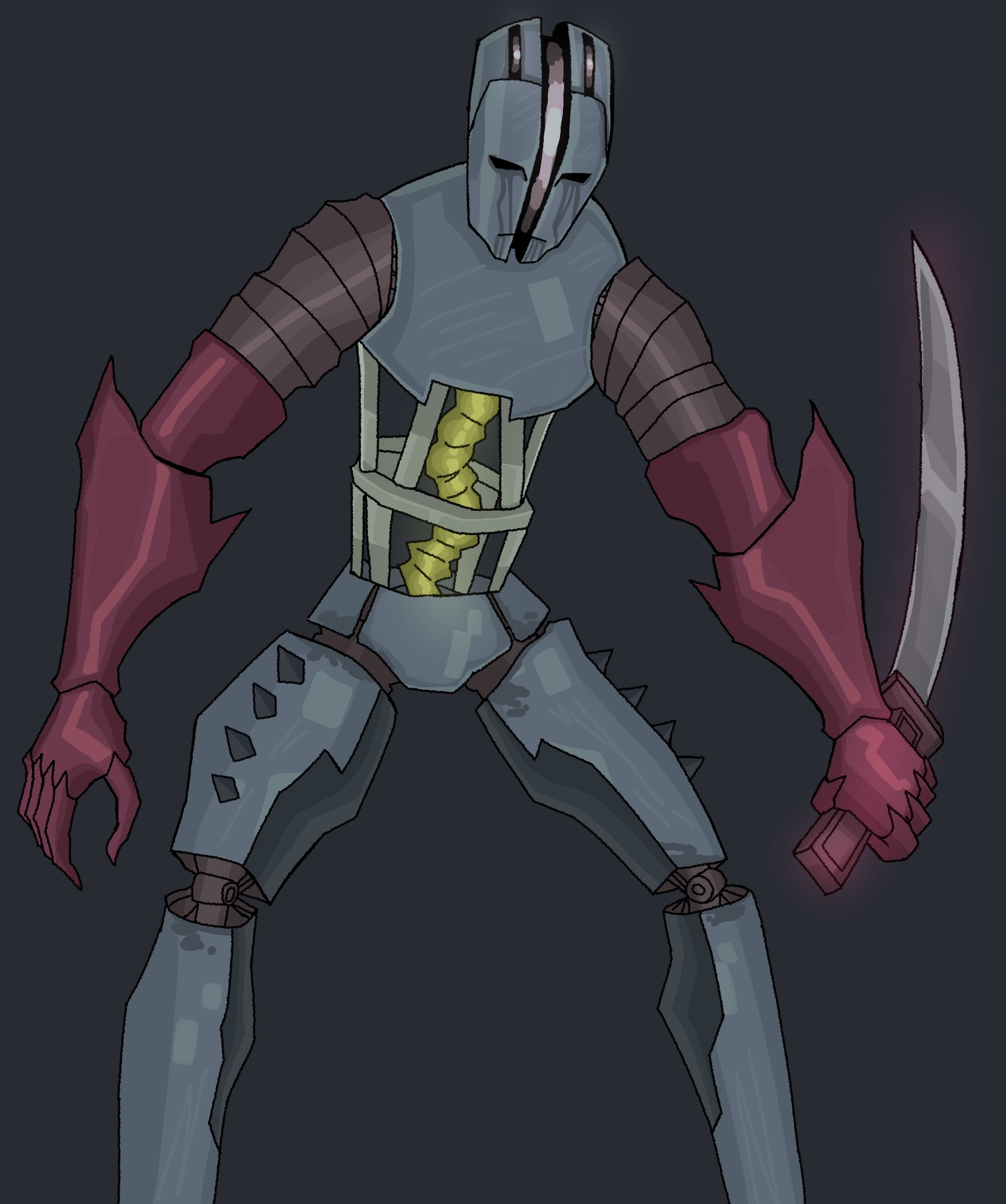
Ferrum is classified as a lesser demon, though its appearance often leads to fatal misjudgments. Its exterior is composed almost entirely of steel, giving it an intimidating, industrial presence that suggests extreme durability.
Despite this, Ferrum is structurally fragile. A single well-placed strike to its abdomen can cause catastrophic collapse, folding its body inward like bent sheet metal. This vulnerability is not widely known and is often discovered too late.
The abdomen serves as Ferrum’s primary weak point. Internally, it consists of several steel rods arranged in a cage-like structure, surrounding a narrow tube that connects the upper torso to the pelvic region. This tube appears vital to its operation.
What flows through this internal channel is undocumented and indescribable. It does not resemble blood, oil, or any known biological substance. Researchers speculate it functions as a form of fuel, sustaining both its movement and combat capability.
Ferrum wields a heavy, katana-like blade composed of refined metal, capable of cleaving through armor and bone with ease. Despite its weight, the demon demonstrates pinpoint accuracy, striking with calculated precision rather than brute force.
While highly lethal in short engagements, Ferrum is considered a glass cannon. Its steel exterior offers little true resilience once compromised, and prolonged combat almost always results in structural failure if its weak point is exploited.
Underestimating Ferrum is a common and often fatal mistake. Overestimating it, however, is the key to surviving the encounter.

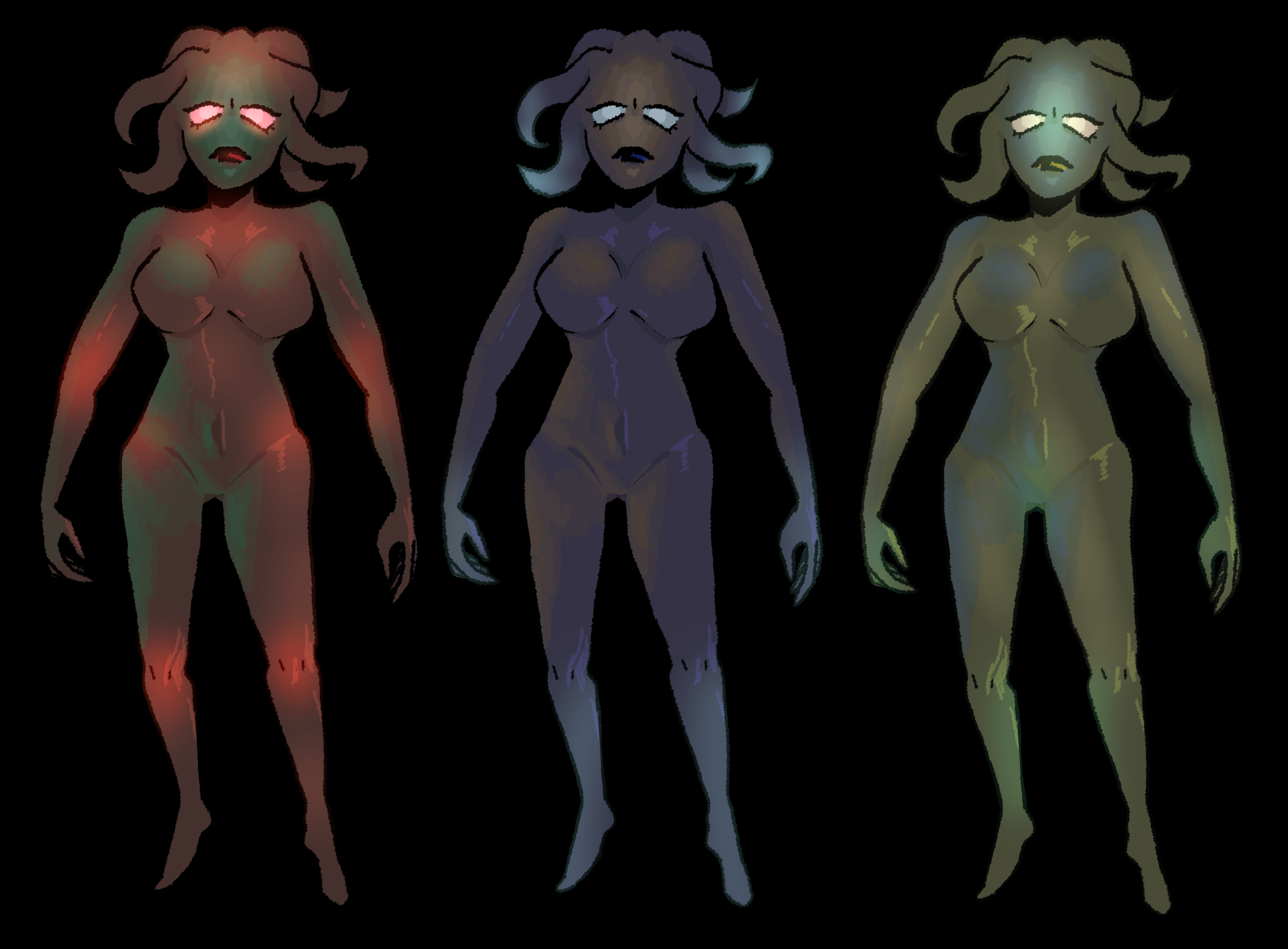
Mezmerith is a lesser demon that dances unnaturally, flowing in a way that makes it appear as if it never touches the ground. They vary in many colors, and are rarely seen in broad daylight. Most sightings occur in secluded dark areas, where they giggle and beckon their victims closer. As they dance, their victims fall unconscious and may eventually pass away or be taken elsewhere.
They are dainty and feminine in figure, constructed with a bioluminescent DNA. Their skin can appear almost transparent when shined upon by light, and they flee when exposed. Their movements are fluid, graceful, and mesmerizing, drawing attention with every step, but always keeping an air of danger.
Mezmerith's presence is both alluring and terrifying; their laughter echoes in empty spaces, and they seem to glide with unnatural ease. Any who encounter them are captivated, yet in danger, as their playful dance hides a deadly threat.
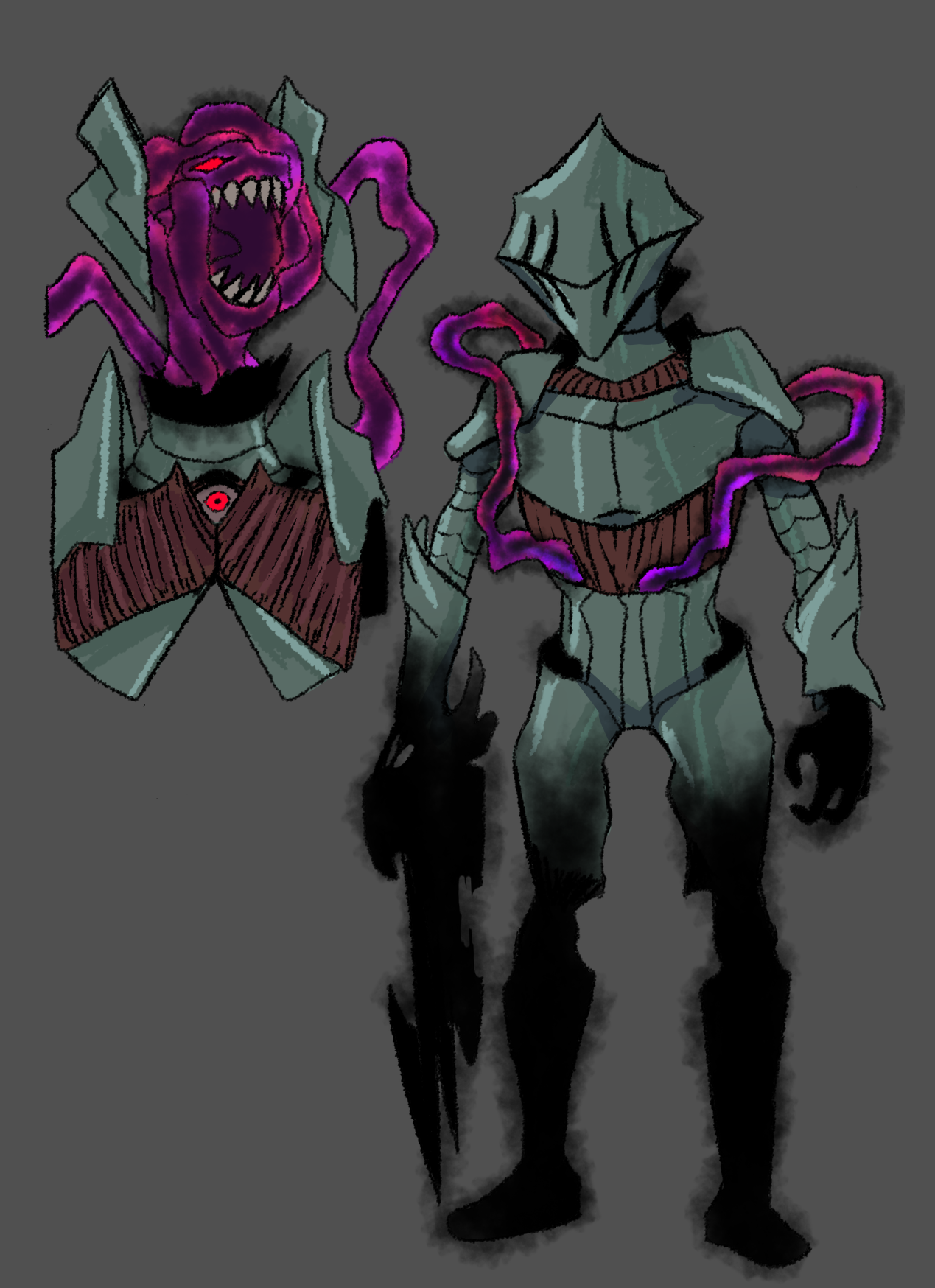
Hell Rage demons originate from souls consumed by an insatiable thirst for power. It did not matter if these people were good or bad in life—their desire for power was deemed a sin. After death, their souls were cast into hell, shunned and tormented for their ambitions. While they attained power, it came at a cost: all they now feel is relentless anger and rage.
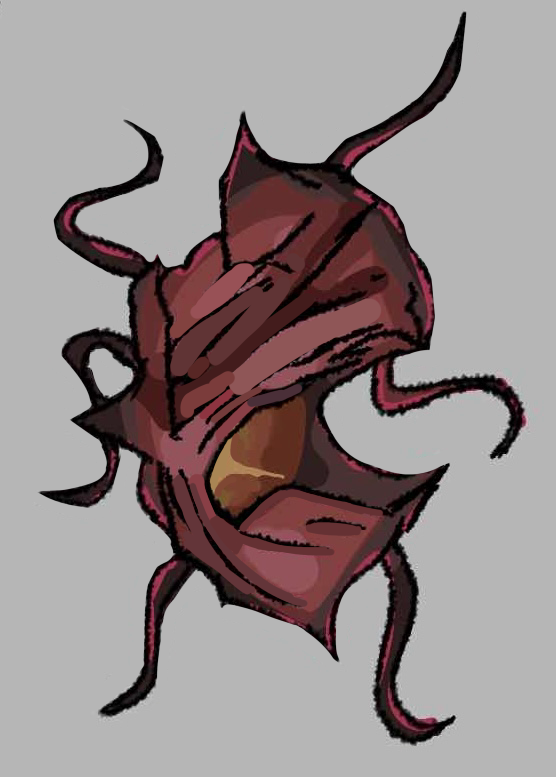
These beings lack a conventional physical body, existing as a magenta-colored demonic energy mass with black fog swirling around a fleshy core that contains a singular, piercing eye. Their form lashes and lashes violently, making their presence terrifying.
Hell Rage demons possess non-living vessels, typically armor from museums, monuments, pyramids, or temples, depending on the soul's origin. They channel their wrath through these armors, making them highly destructive. They are extremely aggravated from the start, and the only way to defeat them is to provoke them further until the fleshy eye-core is exposed. During this time, they unleash devastating crackling and whipping demonic energy.
Commonly, these demons hide within historical places containing armor or artifacts. Observers report that any disturbance near such relics can awaken them, making these places highly dangerous.
Lilim are lesser demons believed to be closely related to the Mezmerith subclass, possibly a sister species. Rather than luring through dance, they hunt through intimacy, proximity, and psychological manipulation.
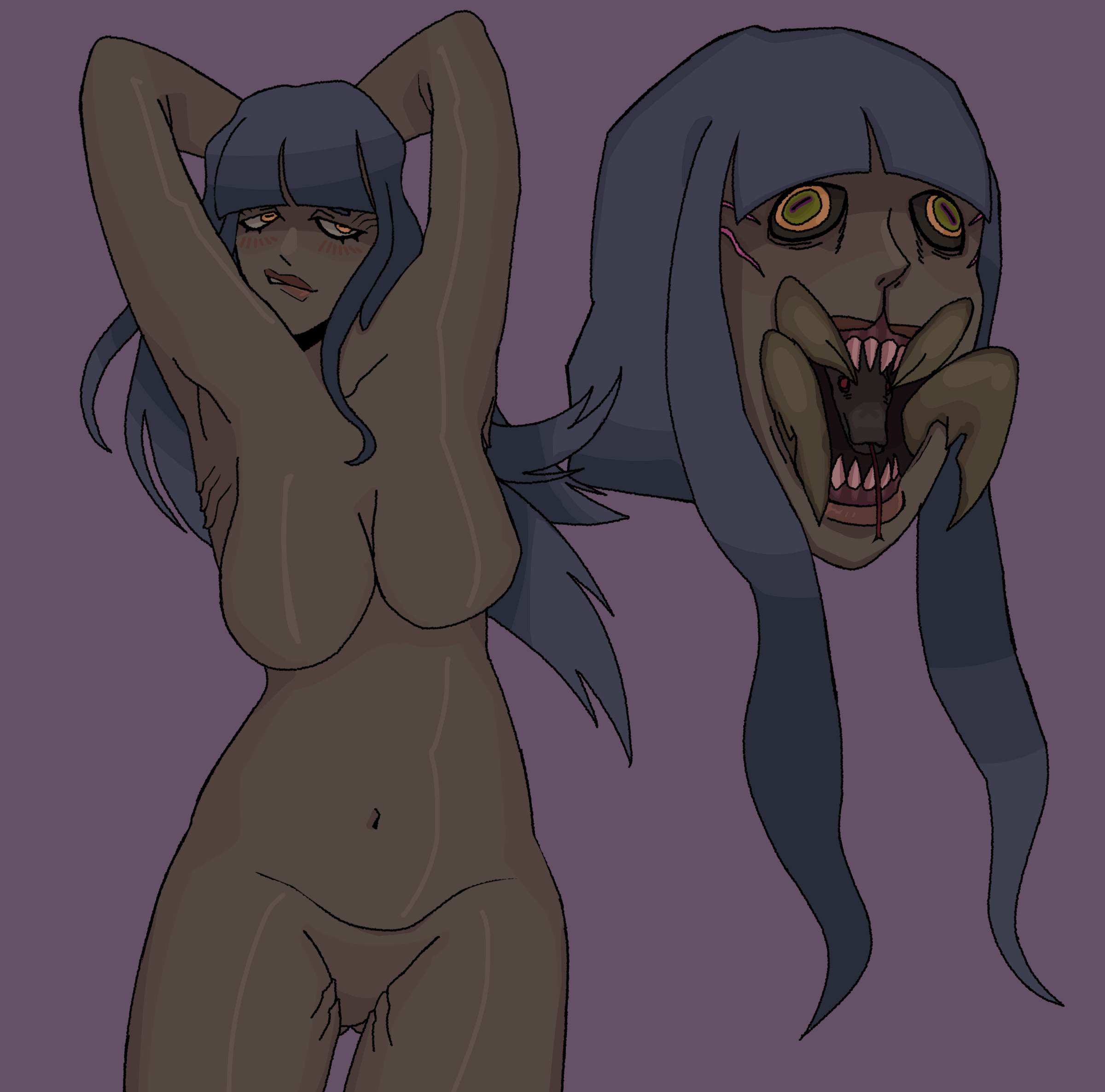
They most often manifest as women and frequently possess female hosts. Like Mezmerith, they giggle and laugh invitingly, subtly influencing their host to speak and act provocatively.
Small slit-like organs near the temples, armpits, and inner thighs emit an unnatural alluring scent, intensifying as the demon prepares to strike. Attacks usually occur in secluded, private spaces.
When transforming, the host’s face contorts violently. The eyes turn black, pupils widen, and mantis-like mandibles tear from the mouth. Teeth sharpen, and the tongue elongates into a black, serpent-like organ with red eyes.
Lilim can reinforce a host’s durability, allowing them to endure injuries that would disable a human, though they remain weaker than greater demons. A proper exorcism will banish them, while fully manifested Lilim may be killed with accommodated weapons.
Rare reports describe Lilim outside a host, still feminine in form but covered in filth, carrion, worms, and serpents. These accounts remain unverified.
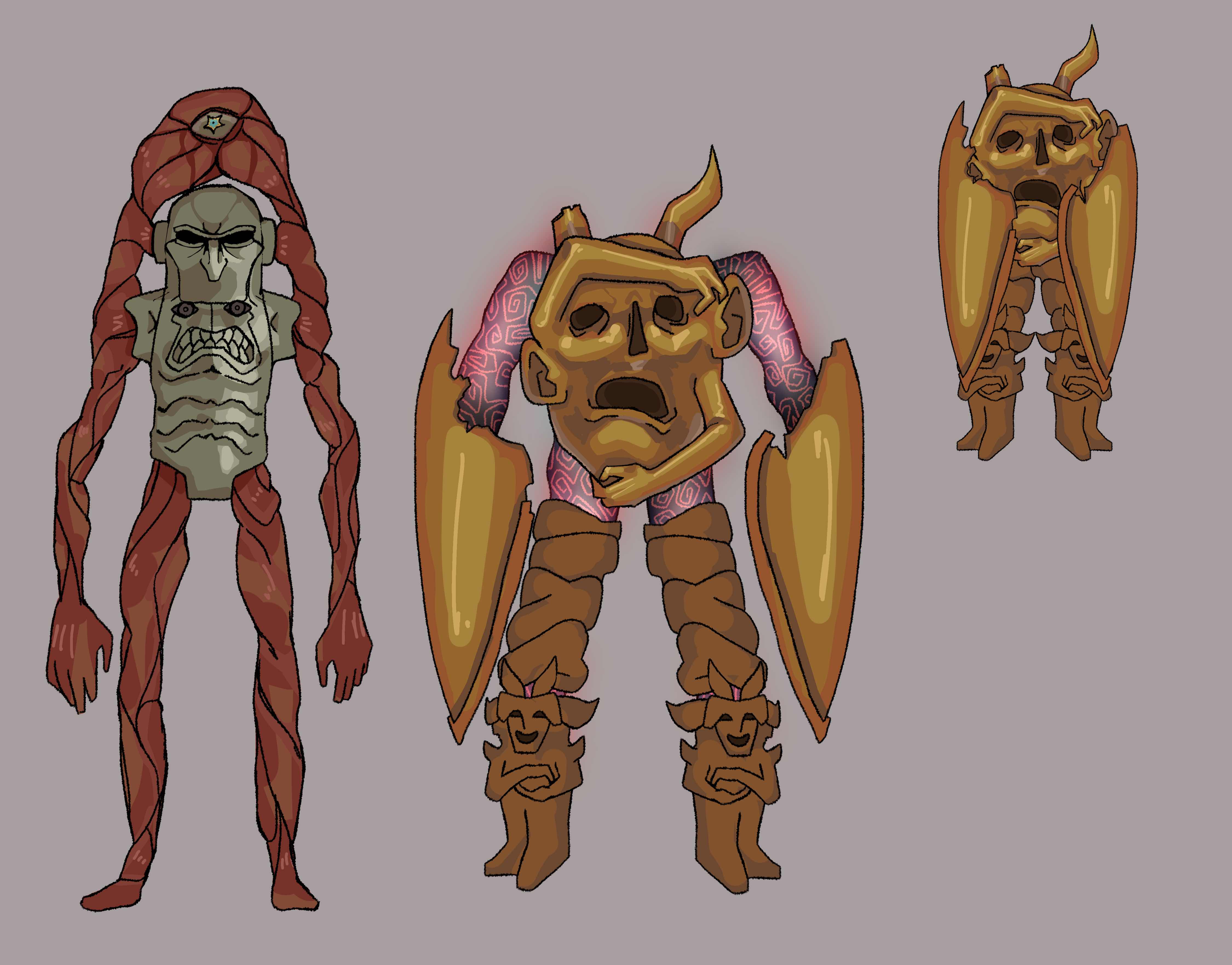
Gildwraith demons take the form of totems or golems. They may appear after a ritual or seemingly spontaneously, and their true origin remains unknown. These entities carry a distinct tribal aesthetic, giving the impression of ancient, mystical craftsmanship. Much like Hell Rage, Gildwraiths can remain motionless and hide as statues, blending perfectly with their surroundings.
There are two known variants of Gildwraith. One is a totem with muscle-like appendages growing from the cavities of its wooden or stone body, giving it a grotesque yet animated appearance. The other variant possesses a gold body, making it far more resilient against attacks. This gold-bodied Gildwraith can adopt a guarding stance, capable of withstanding heavy strikes while maintaining defensive positioning.
These creatures are both enigmatic and dangerous. Their silent presence is often mistaken for art or relics until their movements betray their true nature. They are territorial and highly protective of the areas they inhabit.
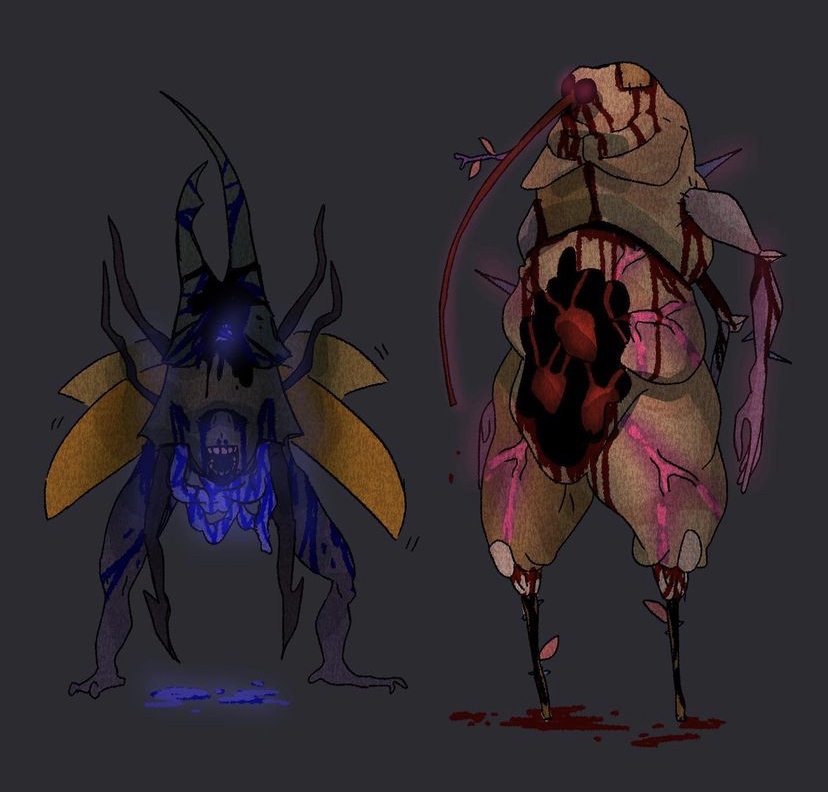
Hemiptera & Lymphera are two distinct demons from the same family, each with a terrifyingly unique form.
The first, Hemiptera, resembles a grotesque Hercules beetle with a screaming face and exposed guts. Its insides glow with bioluminescent blue, including its organs and blood. Despite its fearsome appearance, Hemiptera is weak and unable to fly, waddling clumsily as it preys on the defenseless. It is in constant pain, and its life is an unending struggle, making it almost pitiful to witness.
The second, Lymphera, takes the form of a weevil-like creature standing on two legs with two arms. Its insides are a deep red, and it possesses three hearts. Despite a saggy, fragile-looking body and stick-like legs, Lymphera is incredibly fast, capable of running up to 40 miles per hour. Its veins are massive and glow a vivid hot pink through its skin. Lymphera lacks a mouth, instead using a proboscis to extract blood from living creatures, making it far more dangerous and lethal than its sibling species.
Together, these demons represent extremes of weakness and strength, pain and predation, and are feared for both their grotesque appearances and their unpredictable behaviors.
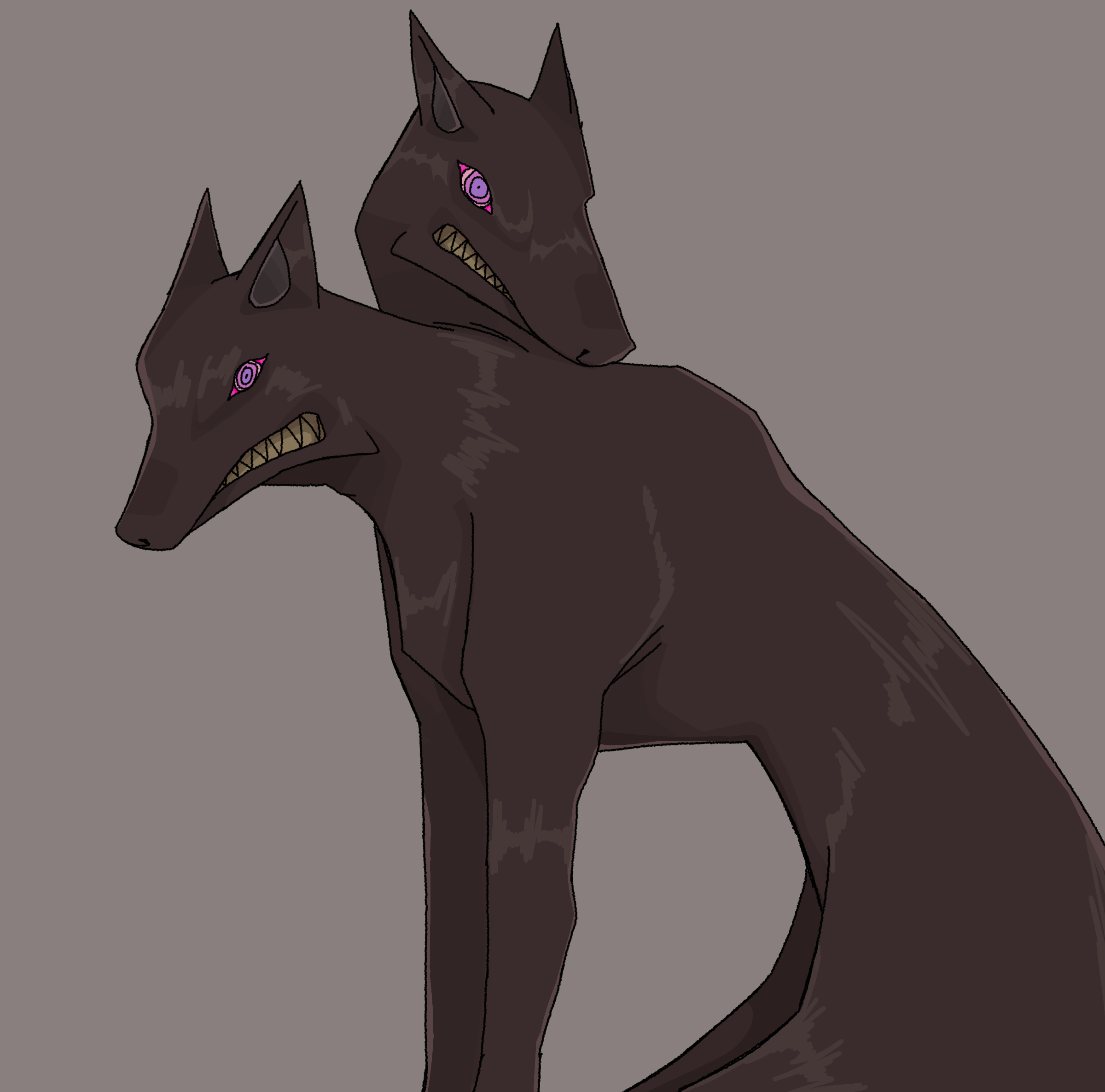
Orthrus is classified as a lesser demon, though many field reports argue it exists dangerously close to the threshold of a greater devil. Despite its ferocious appearance and abnormal endurance, it remains restrained by instinct rather than intellect, preventing full ascension.
Physically, Orthrus resembles a hybrid between a sighthound and a short-haired wolf. Its frame is lean, elongated, and built for speed rather than bulk. The defining trait is its two heads, both fully autonomous yet unnervingly synchronized in movement and aggression.
Each head possesses a powerful jaw structure, granting Orthrus a devastating bite force capable of crushing bone and tearing through armor not reinforced for sustained pressure. The heads alternate attacks rapidly, allowing it to maintain constant offense without sacrificing momentum.
Orthrus are relentless scavengers. They are almost never stationary, constantly moving, circling, pacing, or sprinting between territories. This perpetual motion requires immense caloric intake, forcing them to feed frequently. When deprived of food, they become erratic and dangerously aggressive.
Due to their high-speed metabolism and extreme stamina, Orthrus can sustain severe injuries and continue operating at peak velocity. Broken bones, lacerations, and blood loss rarely slow them immediately, making pursuit or escape extremely difficult once contact is made.
Their behavior has been best described as a canine under extreme stimulant influence — hyper-focused, aggressive, and incapable of retreat once a target has been selected. They do not hunt strategically; instead, they overwhelm through speed, endurance, and sheer brutality.
Despite these traits, Orthrus lacks higher reasoning. It does not plan, command, or manipulate. This limitation is the primary factor preventing its classification as a greater demon. Its power is entirely physical, driven by instinct rather than malice or intelligence.
Encounters with Orthrus are rarely fatal immediately, but prolonged engagement almost always ends in exhaustion or dismemberment. Survivors often report hearing conflicting growls, snarls, or barks as each head reacts independently to stimuli.
While not a leader or herald, Orthrus serves as a roaming threat — a living deterrent that cleans battlefields and hunting grounds alike, leaving little behind but bone fragments and blood trails.

La Tejedor has the appearance of a spider, believed to have originated as a normal spider residing in Hell that later evolved into a stronger and deadlier form.
This demon is usually camouflaged and rarely resides on Earth, but if seen, it is likely part of a pack. Instead of spinning webs, it spins out veins that are toxic to humans, though not lethal.
Functioning as a parasite, La Tejedor requires a host to extend its lifespan. It attaches to a human’s back, gnaws at the neck while gripping the head with its face claws, and pierces the arms, legs, and torso with its appendages to take control.
Tragically, the human is often conscious while this occurs. Once the demon has established its hold, attempting to remove it almost certainly results in the host's death.
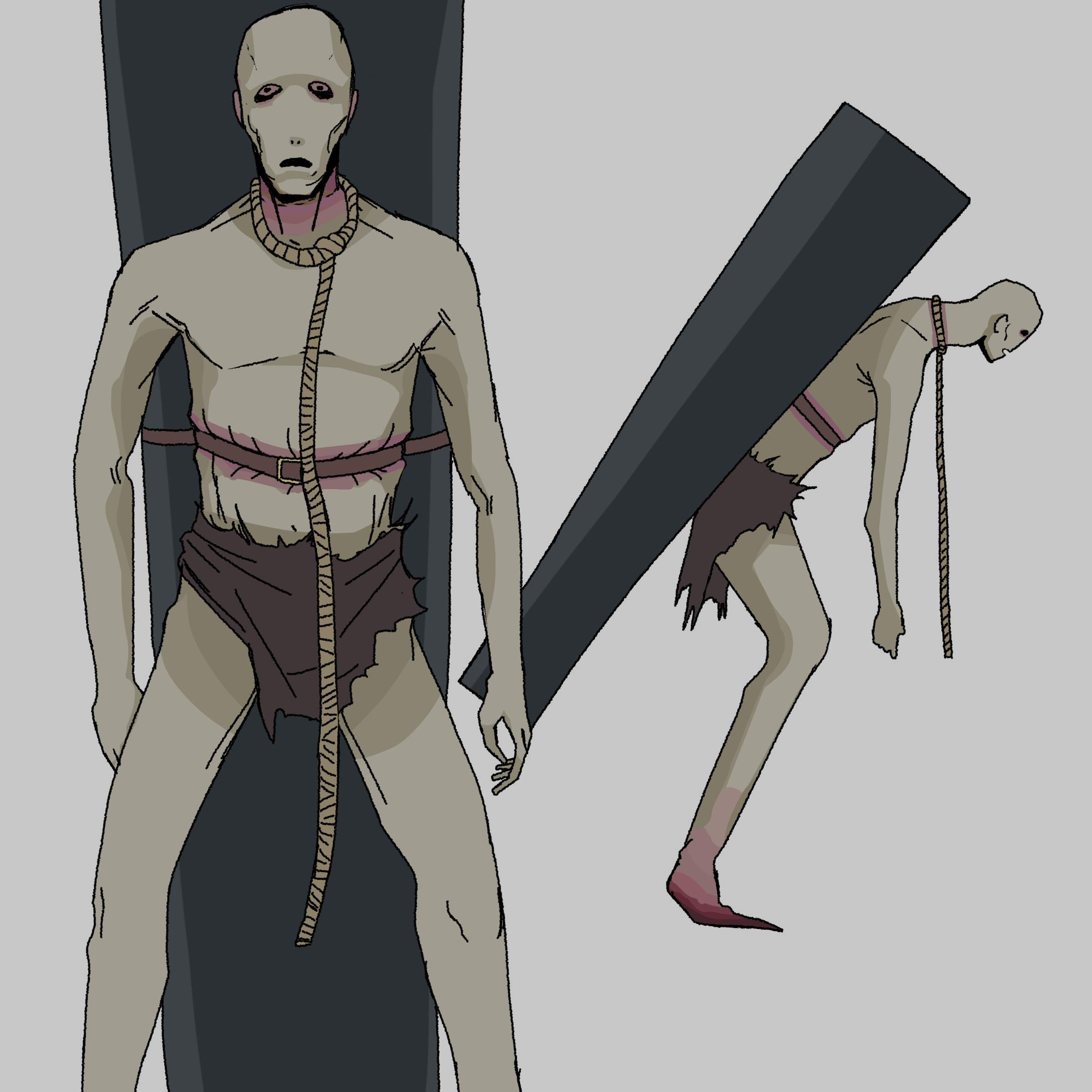
Imps are classified as lesser demons and function primarily as a worker caste. Their bodies strongly resemble human anatomy, varying in height, build, and sex, making them unsettlingly familiar at a distance.
Structurally, Imps are not fragile. Their bones and musculature mirror that of a human, though their bodies are in a constant state of physical strain and pain. Swollen joints, labored movement, and hunched posture are common, not from weakness, but from prolonged punishment and exhaustion.
Their skin is a pale gray, often cold to the touch. Their feet lack toes, ending in narrow, pointed forms resembling jester footwear, which forces an awkward gait. Most wear torn robes and are permanently bound by a noose fastened tightly around their neck.
The noose acts as both control mechanism and failsafe. If an Imp disobeys, resists, or attempts to flee, the noose constricts or locks the body in place, rendering escape impossible. It enforces obedience through constant threat rather than immediate lethality.
Imps are commonly seen hauling heavy coffins strapped directly to their abdomen. The weight presses into their torso, causing visible strain and contributing to their perpetual discomfort. Their legs swell from near-constant movement, yet they are rarely allowed to rest.
When engaged in combat, Imps fight like desperate humans. Their attacks are crude and unrefined — grappling, biting, clawing, and wild strikes — driven by panic rather than strategy. While they lack formal combat training, their pain-numbed state makes them reckless and difficult to intimidate.
If killed, the noose activates and forcibly reanimates the body. In this state, the Imp becomes noticeably stronger than before, exhibiting strength comparable to a physically fit human. This increase does not make them formidable, but it allows them to fight with greater force and reduced hesitation.
Despite this enhancement, reanimated Imps remain vulnerable to conventional weapons. Gunshots, especially to vital areas, are still effective, and sustained damage will permanently put them down. Their second life is more aggressive, but shorter.
Mentally, Imps are unstable and easily distracted. They may suddenly fixate on a nearby person and attack, only to lose interest moments later and resume their task as if nothing occurred.
Imps are considered expendable assets within demonic hierarchies. Individually, they pose limited threat, but their persistence and sheer numbers make them a constant, miserable presence rather than a true danger.
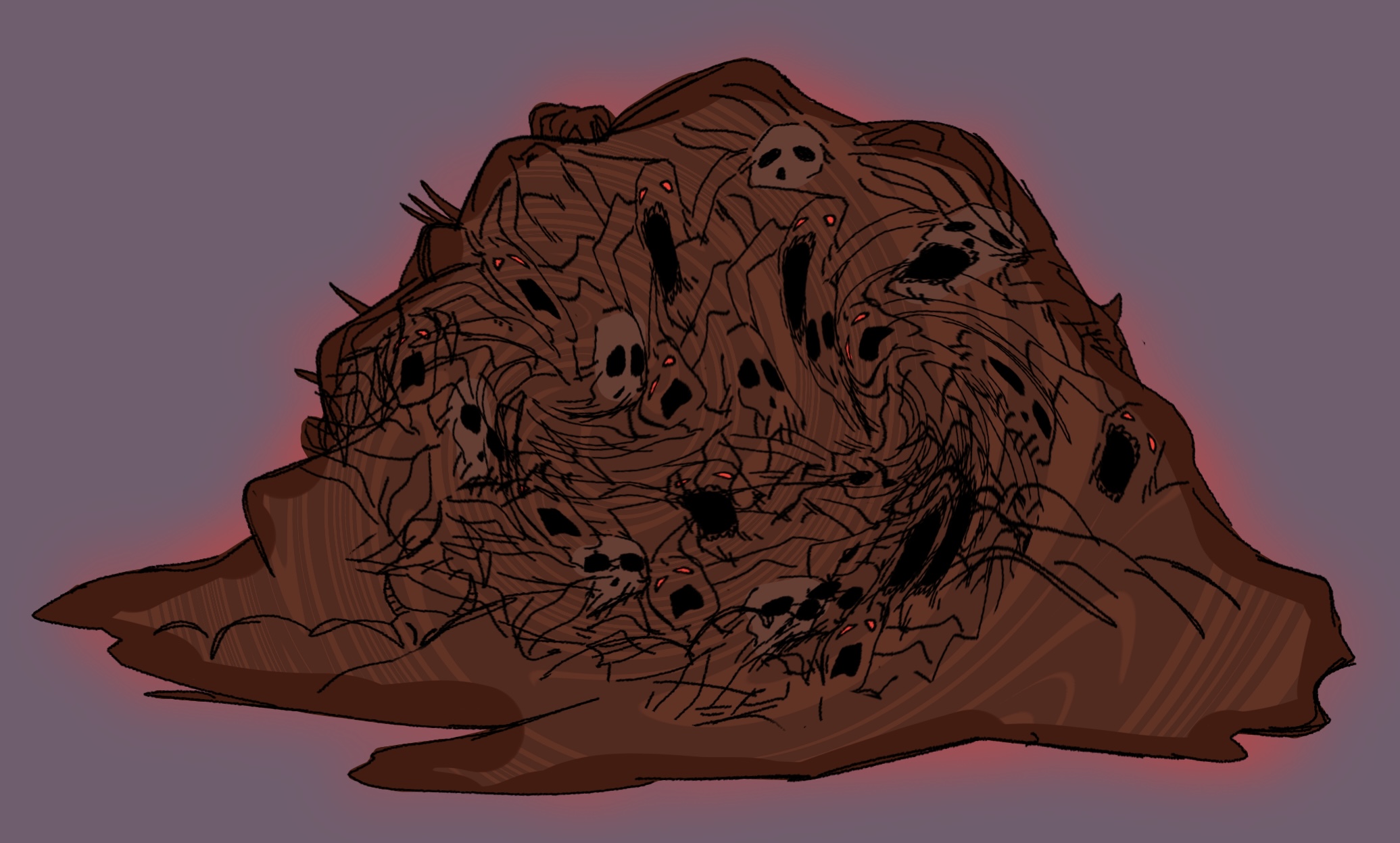
Fester is a mass of carrion formed from multiple lesser demons and lost souls fused together into a single, unstable heap.
It moves slowly and lacks the ability to fight or defend itself. Its structure is loose and uneven, constantly shifting as bodies within it settle and merge.
Its only behavior is consumption. Any demon or human it reaches is absorbed into the mass, increasing its size and density over time.
Individuals consumed do not die immediately. Their bodies and souls are trapped within the mass, gradually losing form as they are integrated.
Fester cannot truly be killed. Most attacks are absorbed by its outer layers, which act as a sponge to physical, elemental, and even supernatural damage.
Under extreme stress, its core may become partially exposed. The core is buried deep within layers of rot, decay, and fused remains. While it is the closest thing Fester has to a vital point, it is not weak and remains heavily protected.
Once damaged, Fester will simply reabsorb surrounding matter to rebuild itself, restoring mass and structure over time.
Witnesses report hearing cries, whispers, and screams coming from inside Fester, growing louder as it feeds. These sounds are believed to be remnants of consciousness from those fused within.
Its outer body emits a constant, overwhelming stench of rot and decay, often detectable long before the entity itself is visible.
Despite its near invulnerability, Fester is still classified as a lesser demon. Its physiology limits it severely — it moves at a slow pace, lacks any offensive capability, and is incapable of strategy or pursuit. It does not hunt, fight, or defend itself beyond passive absorption. Its existence revolves solely around consumption.
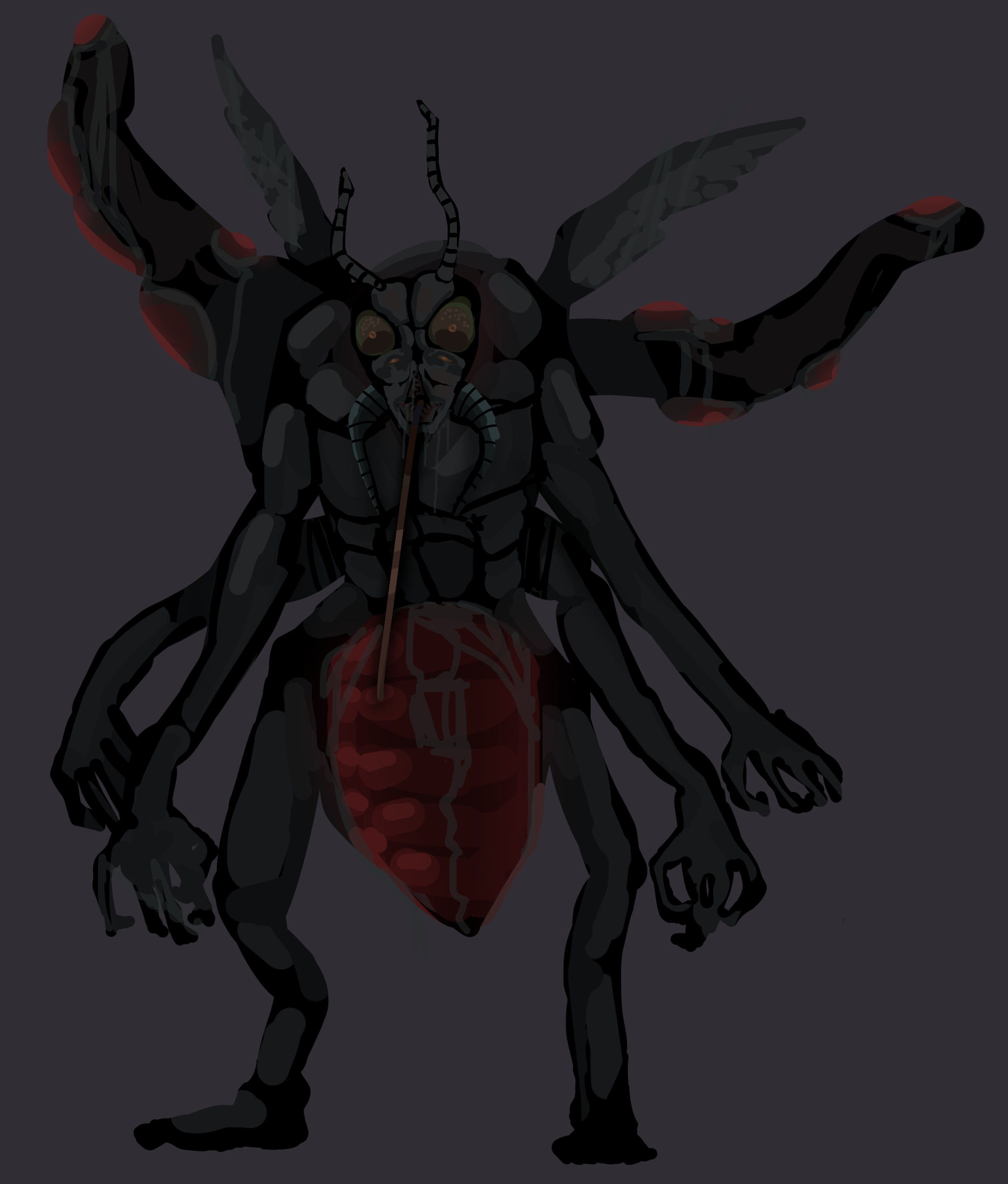
Plague is a lesser demon that takes the form of a grotesque, monstrous mosquito. Its blood carries some of the most horrifying diseases ever recorded, illnesses thought to be extinct or impossible by modern medicine. When Plague manifests in the human world, it does not isolate itself—it actively seeks areas densely populated with people in order to feed efficiently.
Wherever Plague resides, the surrounding environment rapidly degrades. Water becomes stagnant and foul, the air thick with rot and insects. Trash accumulates unnaturally fast, mold spreads across buildings, and swarms of flies and lesser parasites begin to appear. Vegetation wilts, leaving behind swamp-like terrain even in urban environments. Fog often lingers unnaturally long, carrying the stench of decay.
It moves erratically in random jolts of speed, meaning yes it can be slow at times. this demon has its bodily fluids leaking out of its pores, any direct contact to it seems to send people into a heavy fever, and most likely will contract disease.
Plague demons have a known rivalry with the Lymphera species. Encounters between the two frequently devolve into violent clashes, with cases of cannibalism recorded on both sides. This hostility appears instinctual rather than territorial, suggesting a deep-rooted biological hatred. While out of combat, this demon seems to be groaning "nosoi" repeatedly, who knows why..
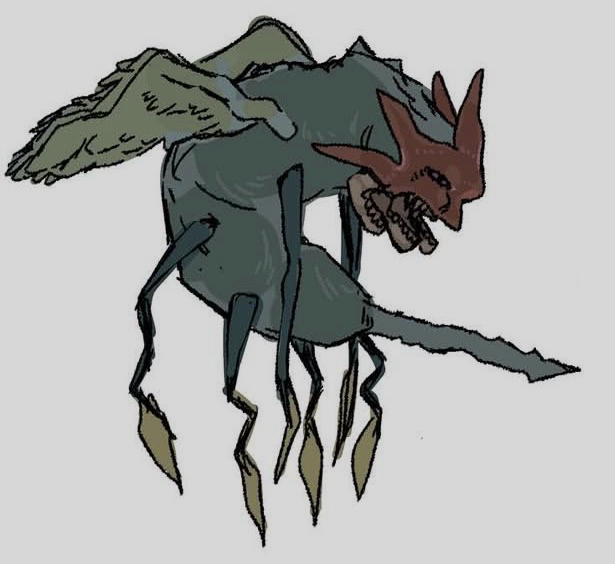
Stygian is classified as a lesser demon and has been documented in a wide range of sizes. The smallest observed specimens are roughly the size of a human fist, while larger individuals can reach the height of a person from lower abdomen to head. Size appears to directly correlate with durability rather than intelligence or aggression.
Structurally, Stygian falls under the insectoid category, though it presents a chimera‑like build. The torso resembles that of a wasp, terminating in a long, jagged blade that functions as a stinger. This stinger is its primary and most effective means of attack. The insect legs it possesses are largely nonfunctional; they end in singular claws but remain limp and sway loosely while the demon is in motion.
The creature’s wings are often described as angel‑like in shape, though purely anatomical and not symbolic. These wings allow constant flight. Stygian does not land. Even when inactive or resting, it remains airborne, hovering in place. Prolonged observation confirms that grounding is either impossible or biologically unnecessary for the creature.
The face is star‑shaped with a rubbery texture. The lower jaw is exposed and consists of a split human jawbone, devoid of flesh in some areas. This jaw does not appear to be used for feeding and instead hangs open or clenches reflexively during movement.
In terms of threat level, Stygian is capable of killing, but it is not especially resilient. Smaller specimens can be neutralized with a few well‑placed gunshots. Larger variants require heavier firepower, such as shotgun rounds, but still lack the endurance seen in higher‑class demons. The demon’s mobility and stinger make it dangerous at close range, but its body does not withstand sustained damage well.
Stygian is often compared to Hemiptera in terms of survivability, though it is considered marginally more dangerous due to its ability to fly quickly and inflict harm with its stinger blade. Outside of that, it shows limited combat capability and relies heavily on surprise rather than brute force.
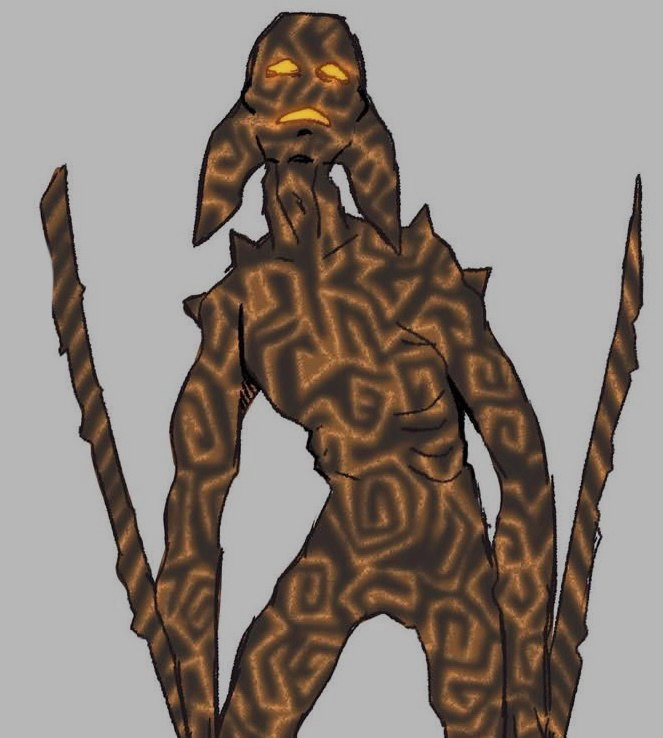
Riot-class Greater Demons are to be considered an immediate and catastrophic combat threat. Under no circumstances are civilian forces, private hunters, or non-authorized personnel permitted to engage. Any encounter must be reported immediately and evacuated.
Riot bears superficial resemblance to Hell Rage entities, but this comparison is dangerously misleading. Unlike Hell Rage demons, Riot does not require armor or external vessels to manifest. It exists as a fully autonomous demonic organism, sustained entirely by its own core and internal energy system.
The entity is engulfed in violently unstable demonic energy, appearing dark and ashen with washed-out yellow and orange luminescence coursing through its form. A physical body exists beneath this energy storm, though it has never been directly observed. Visual instrumentation fails when attempting prolonged analysis.
Riot entities are consistently observed wielding dual katana-type blades, each saturated in the same demonic energy surrounding the host. These weapons appear to be organic manifestations rather than forged tools, responding directly to the demon’s emotional and combat state.
DO NOT ENGAGE. Riot demons grow exponentially stronger the longer they remain in combat. Hostility, resistance, and sustained confrontation actively empower the entity. Attempts to “wear it down” have universally resulted in total squad loss.
All personnel ranked Special Operations Officer and below are expressly forbidden from engaging a Riot-class entity. This restriction extends to low-ranking units of the B.W.E.F (Bio Weapon Extermination Faction), despite government mandate. Riot-class threats remain unsafe even for sanctioned extermination forces lacking high-clearance authorization.
Riot demons are classified as Pseudo-Devil Threats. Engagement is authorized only for top-tier B.W.E.F divisions, supreme cathedral exorcists, or equivalent entities with confirmed Devil-Class combat clearance.
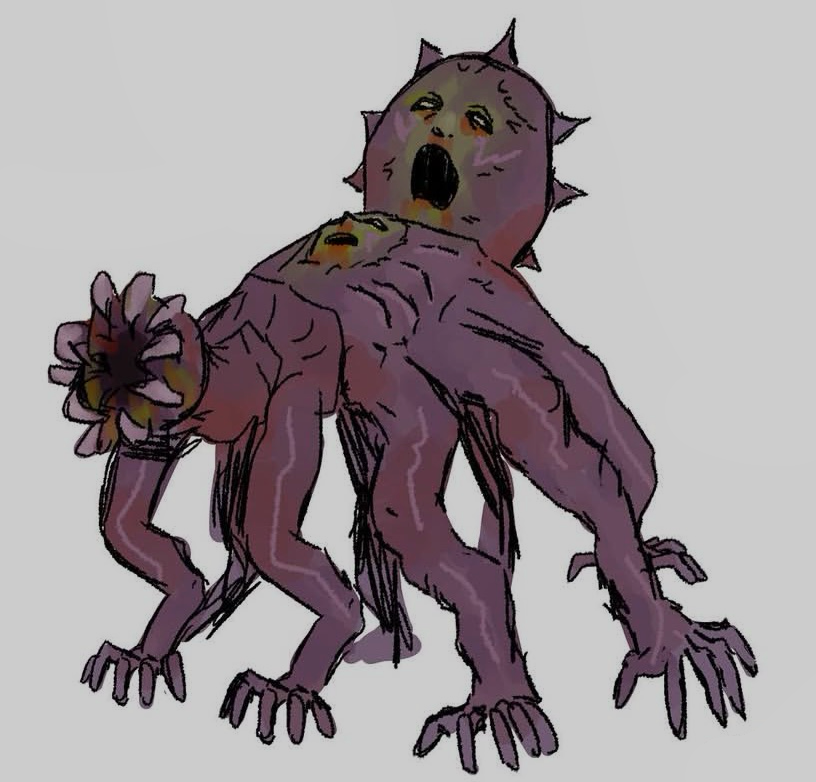
Ooglesh is a greater demon. Its origins are unknown, but legends from around 500 years ago claim it comes from the darkest pits of Hell, a void where there is nothing but emptiness. Back then, it was shunned and considered a "nobody" by other demons, never accepted among them.
Its structure is somewhat arachnid, similar to La Tejedor, but vastly more grotesque. The sternum bears a human-like face with screaming features and bony ribs pressing against its swollen skin. The abdomen has the second face, also screaming, surrounded by thorns and oozing sickly orange-brown pus from the mouth, nose, and eyes.
Its legs are twisted human arms, and the skin covering its body is a swollen purple-red, with the areas surrounding the two faces turning a sickly yellow-green. The main “spider head” is a cylindrical, worm-like appendage with a single hole for a mouth, encircled by jagged, sharp fangs.
Ooglesh preys on people to savor fear. The more terrified its victim, the more its two faces scream, moan, and emit grotesque sounds. Its height ranges from that of a grown husky dog to as tall as a standing person. Some lesser demons have fallen prey to it, and it is even disliked by other greater demons.
Its attacks are sudden and violent. It lunges at victims, dances in a tribal-like fashion, and grabs hold, squeezing them until they are unconscious, broken, or dead. Sometimes it holds them in place to consume them alive. Its combination of human-like arms, two screaming faces, and thorned abdomen makes it almost impossible to anticipate, creating a perfect predator of terror.
Ooglesh is more than a demon; it is a living nightmare. Its presence alone causes panic, and those who encounter it quickly realize that escape is nearly impossible.
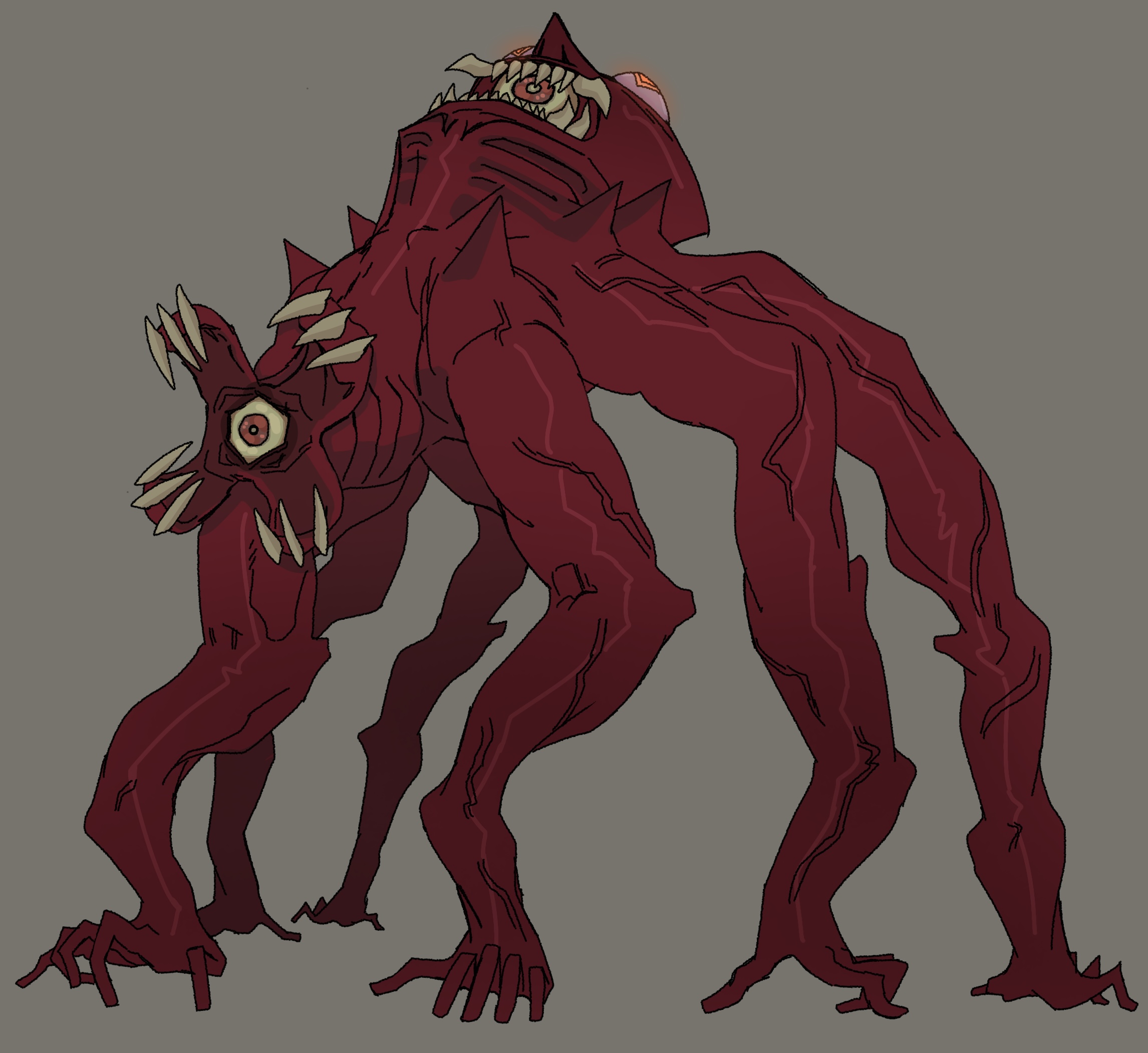
The Tortured is a demon derived from the Ooglesh lineage, transformed by extreme and prolonged suffering. These entities were subjected to high-stress situations while simultaneously tortured, the precise duration and methods of which remain unknown. The result is a form both horrifying and powerful, yet entirely unpredictable.
Its cylindrical head has permanently split its mouth into four sections, each lined with jagged teeth. A thick bony neck has emerged beneath, supporting a single large eye at the center, which continuously observes its surroundings with unsettling awareness.
The abdomen and sternum have fused into a grotesque hybrid, forming a second demonic face. This face bears an eye embedded within its gaping mouth and two glowing eyes above, giving the demon a disconcerting, multi-focal gaze. The fusion of these features amplifies its ability to intimidate both human and demonic observers alike.
The body itself has swollen unnaturally, taking on a deep, dark red coloration. Muscles protrude and pulse beneath the skin, creating a visual impression of constant motion, even when the demon stands still. Its former tribal dances, once rhythmic and deliberate, have become chaotic, jagged movements. When it performs these erratic dances, The Tortured actively drains demonic energy from nearby entities, growing larger and more formidable with each step.
Its arms are a fusion of raw muscle and elastic bone-like tissue, granting remarkable strength and reach. This allows the demon to strike or ensnare targets from distances that would normally be impossible, making direct confrontation extraordinarily dangerous. Despite this, it moves slowly when not dancing, conserving energy and relying on its ritualized displays to weaken opponents before engagement.
Witnesses report a constant aura of despair surrounding The Tortured. The air around it feels heavy, and faint whispers—possibly remnants of the tortured souls fused within it—can sometimes be heard. Its presence alone is enough to unnerve other demons and humans, creating hesitation and fear even before it makes physical contact.
The Tortured represents a unique case among greater demons: an entity whose power derives not from intellect or strategy, but from the relentless agony that shaped its form. It is a living testament to suffering, a being whose very existence is a mechanism of terror and attrition.
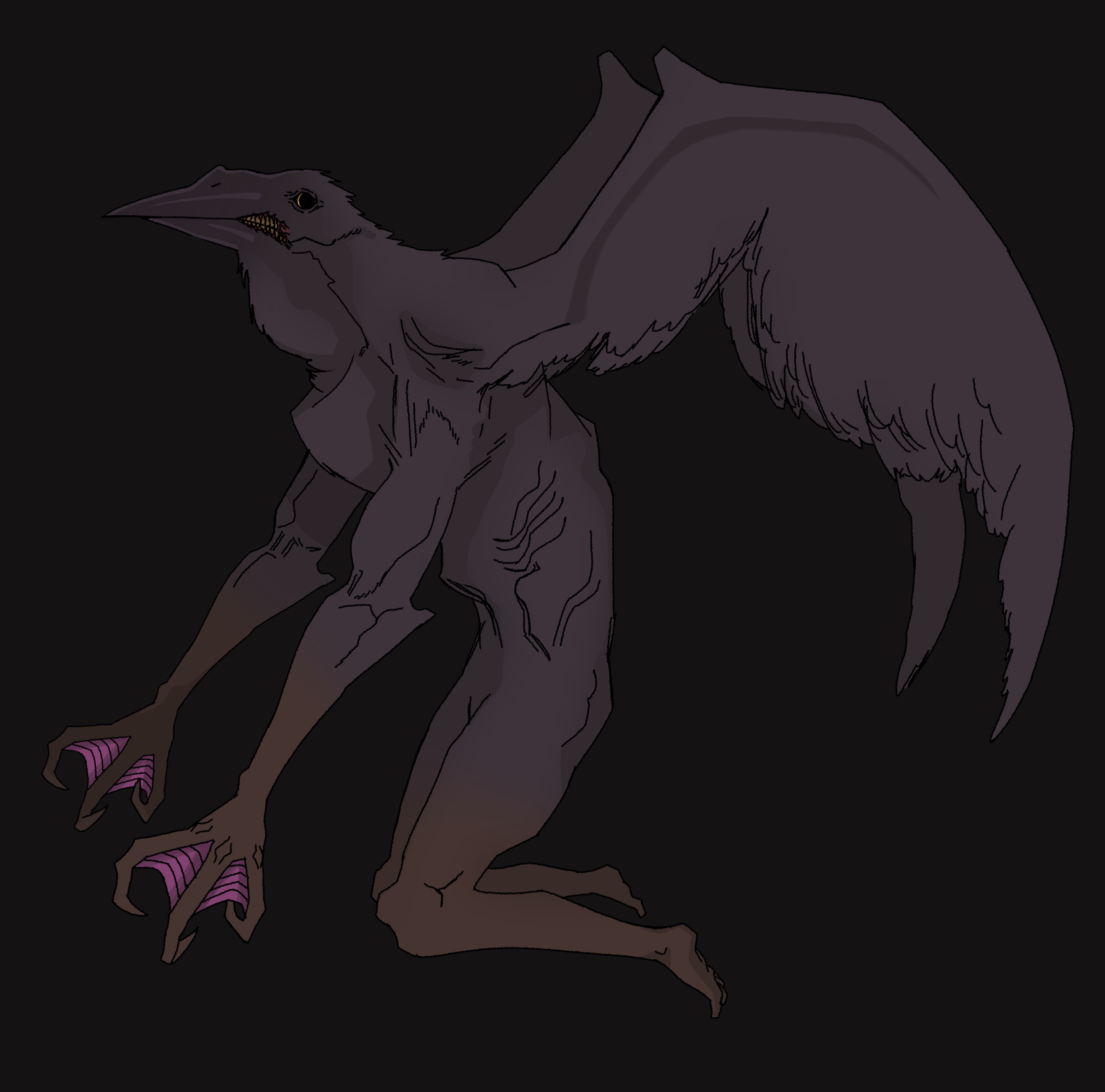
Wraith is a demon capable of dispersing its body into a gaseous form, allowing it to evade physical attacks and reposition freely.
It emits powerful sonic waves from its mouth, disrupting enemies through severe disorientation, pain, and internal damage.
When corporeal, Wraith attacks with sharp claws and rapid strikes. It is consistently surrounded by a flock of crows, which appear bound to it and often signal its presence.
Prolonged use of its gaseous state forces Wraith to reform physically, creating a brief window where it can be harmed.
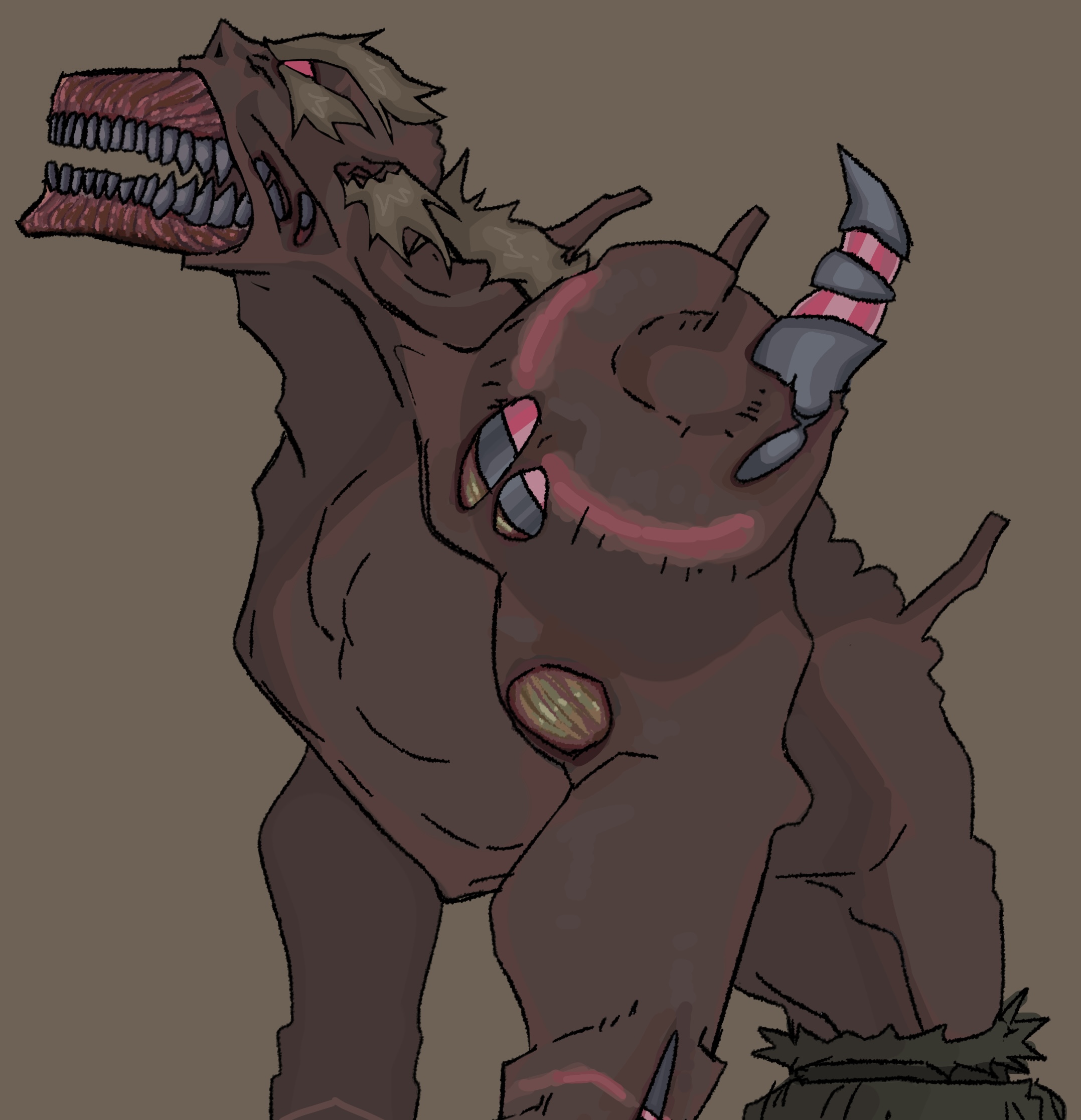
Peligro is classified as a Greater Demon, commonly referred to as a Man-Dog due to the way its physical form represents both human and canine traits simultaneously. This designation originates from early sightings and consistent modern reports describing a creature that does not fully resemble either species, but instead an unsettling fusion of both.
The earliest known records of Peligro trace back to Spain, documented through dark mythological stories passed down through generations. These accounts were once believed to be exaggerated folklore, but modern encounters strongly align with the descriptions found in those early records.
Peligro is most often encountered near cemeteries or burial grounds and shows a strong preference for fog-heavy environments. Whether natural or anomalous, fog appears to provide both concealment and an advantage during hunts. Multiple witnesses report reduced visibility and muffled sound shortly before contact.
Physically, Peligro is heavily top-weighted. Its upper body is extremely muscular and broad, while the lower half of its body narrows significantly. Height estimates range between seven and nine feet tall. There are repeated observations of its skin tearing or splitting due to excessive muscle mass pressing outward.
According to legend, Peligro was once a man who betrayed a king by having an affair with the king’s wife. Following his execution, it is believed his soul was reborn in Hell as punishment. While unconfirmed, the consistency of this legend across multiple regions is notable.
The head of Peligro resembles that of a human, but severely distorted. Its mouth is permanently agape, with the cheeks stretched and torn by a protruding canine-like maw. The gums form the structure of the maw itself, while the teeth are unnaturally dense and described as hard as steel.
Behaviorally, Peligro hunts in a manner similar to a wolf. It stalks its prey for extended periods before initiating an attack, often remaining unseen until the moment of engagement. Victims rarely report awareness of pursuit.
Peligro is most commonly observed in packs of three. Within these groups, internal aggression is frequent. Reports indicate that individuals will sometimes fight one another over prey, even after a successful kill, suggesting dominance disputes rather than cooperative behavior.
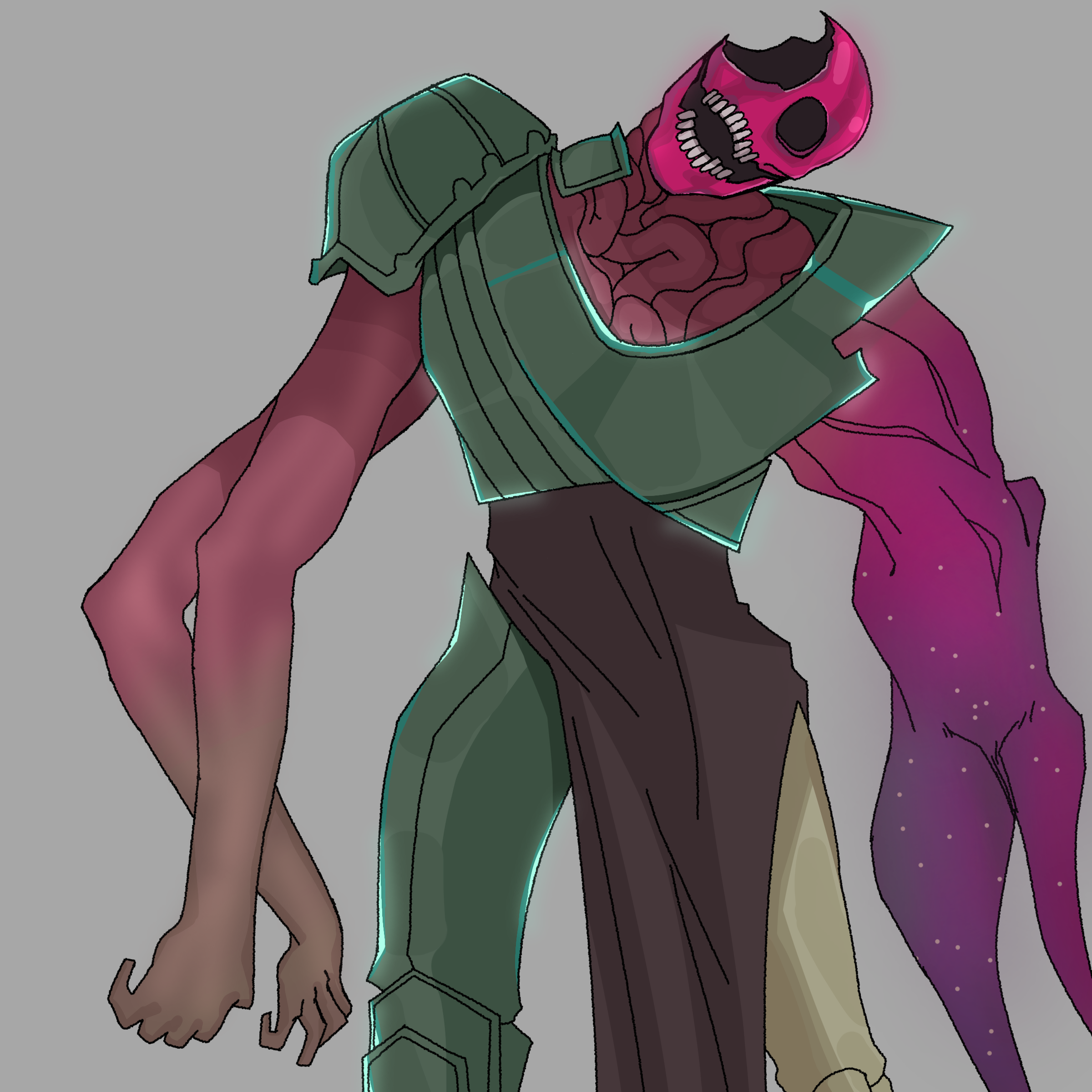
Envy is a greater demon originating from the deepest, lightless layers of Hell, dangerously close to the territories once ruled by Ooglesh. These demons are said to envy anything that exists outside the dark — warmth, light, status, and even purpose itself.
Ancient legends describe Envy demons as former vanguards, elite warrior entities who once had everything: power, rank, and reverence. Yet despite this, they grew consumed by jealousy toward other warrior demons. This unrelenting envy eventually twisted their forms and minds, corrupting them into what they are now.
Their bodies are adorned with fragmented pieces of royal armor, remnants of their former prestige. Their faces are replaced with a hollowed metal mask, glowing in a vibrant pinkish-red hue. The right arm has mutated into a claw-like, scissor weapon, while the left side of the body bears two unnaturally long, thin arms capable of stretching far beyond normal limits.
One of their legs appears partially ceramic in nature, brittle yet functional, causing their movement to be uneven and labored. Envy demons limp when they walk or run and are unable to jump, making their approach slow and unsettling rather than swift.
What makes Envy truly dangerous is its left-side arms, which can extend outward to seize victims from a distance, dragging them close where escape becomes nearly impossible. Once within reach, the demon’s bitterness manifests violently, often resulting in brutal, intimate kills.
Sightings describe Envy demons lingering in shadows, watching others from afar, festering in resentment before finally acting. Their presence is often accompanied by an oppressive sense of longing and hostility, as if the demon itself despises everything it cannot be.
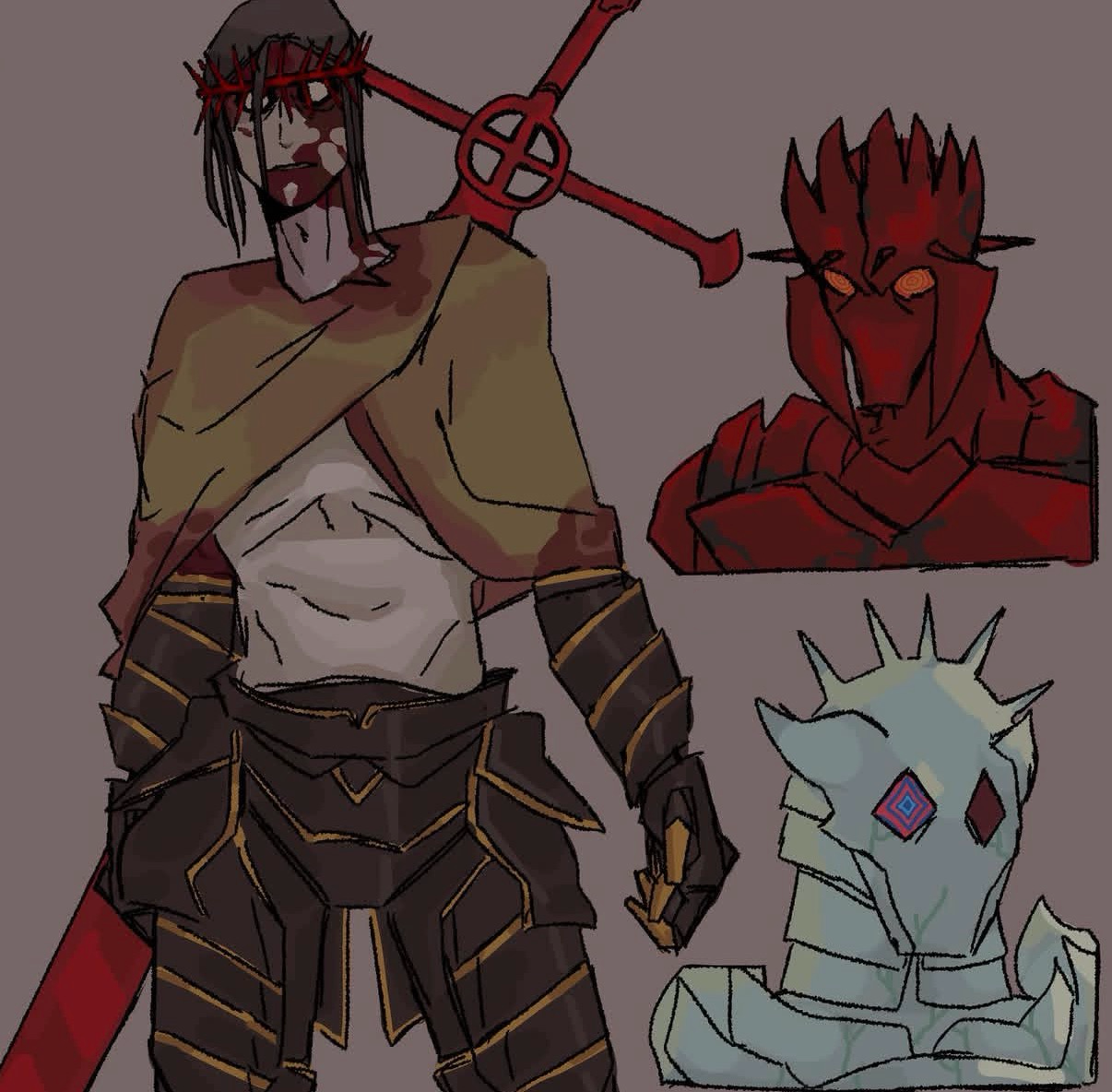
Ichor Knight is a Greater Demon that is rarely encountered in the human world. However, when sightings do occur, confrontation is strongly discouraged under all circumstances. This is not a threat that escalates gradually—engaging it at any level is considered a fatal mistake. Due to its humanoid posture and movement, it can be easily mistaken for a human at a distance, particularly when seen walking calmly through populated or abandoned areas.
The Ichor Knight is typically seen wearing a cloak with no consistent coloration. Reports vary widely, suggesting that the cloak’s color may differ between individuals or change over time. The only consistent elements of its attire are its gauntlets and armor leggings, both forged from black steel and accented with gold. Notably, it does not wear a chest plate or helmet, leaving much of its upper body exposed.
One of the most recognizable features of the Ichor Knight is its weapon: a sword forged entirely from crystallized blood. This weapon appears solid and durable despite its origin, and it is always present during recorded encounters. In addition to this, the demon is often observed wearing a thorny crown, embedded directly into its flesh rather than resting loosely on the head.
The Ichor Knight is perpetually soaked in blood. This is not the result of recent combat alone, but rather a defining trait of the demon itself. Classified as a blood demon, its bodily fluids constantly seep and coat its form, giving off a heavy metallic stench.
An important distinction of the Ichor Knight is its ability to undergo transformation, a trait shared by very few demons. As stress accumulates—whether from combat, pursuit, or environmental pressure—its blood begins to boil internally. Once this reaches a critical threshold, the demon undergoes its first transformation into what has been designated as an R Cell Knight.
In the R Cell Knight state, the demon’s external body becomes encased in crystallized blood armor. Its eyes, previously described as blind or dulled, shift into swirling red and yellow patterns, giving the impression of growing instability or mania. Physical durability and aggression increase noticeably at this stage.
Continued stress triggers a final transformation known as the W Cell Knight. During this phase, one of the demon’s eyes blackens completely, a result believed to be caused by extreme internal strain. Its body temperature rises to a point where exposed flesh can cause severe burns or melt skin on contact. The blood itself shifts composition, becoming fully white blood cells, while the armor thickens and becomes far more bulky.
In this final form, the Ichor Knight is fully manic. Eye coloration shifts again, now displaying violent blue and red hues. This state is unstable and marks the demon’s final life phase—once reached, death is inevitable, though not immediate.
According to fragmented accounts, the Ichor Knight was once a lost soul in Hell that desired significance above all else. Its current form is believed to be the result of that desire manifesting into something twisted, obsessive, and self-destructive.
The Harpy is a malevolent Greater Demon whose existence predates many modern records. The species itself is deeply rooted in ancient folklore and myth, and for centuries the name “Harpy” was used by humans without fully understanding what it truly represented. It is considered one of the most fabled demons to ever exist, not due to rarity, but due to how long it has been observed throughout history.
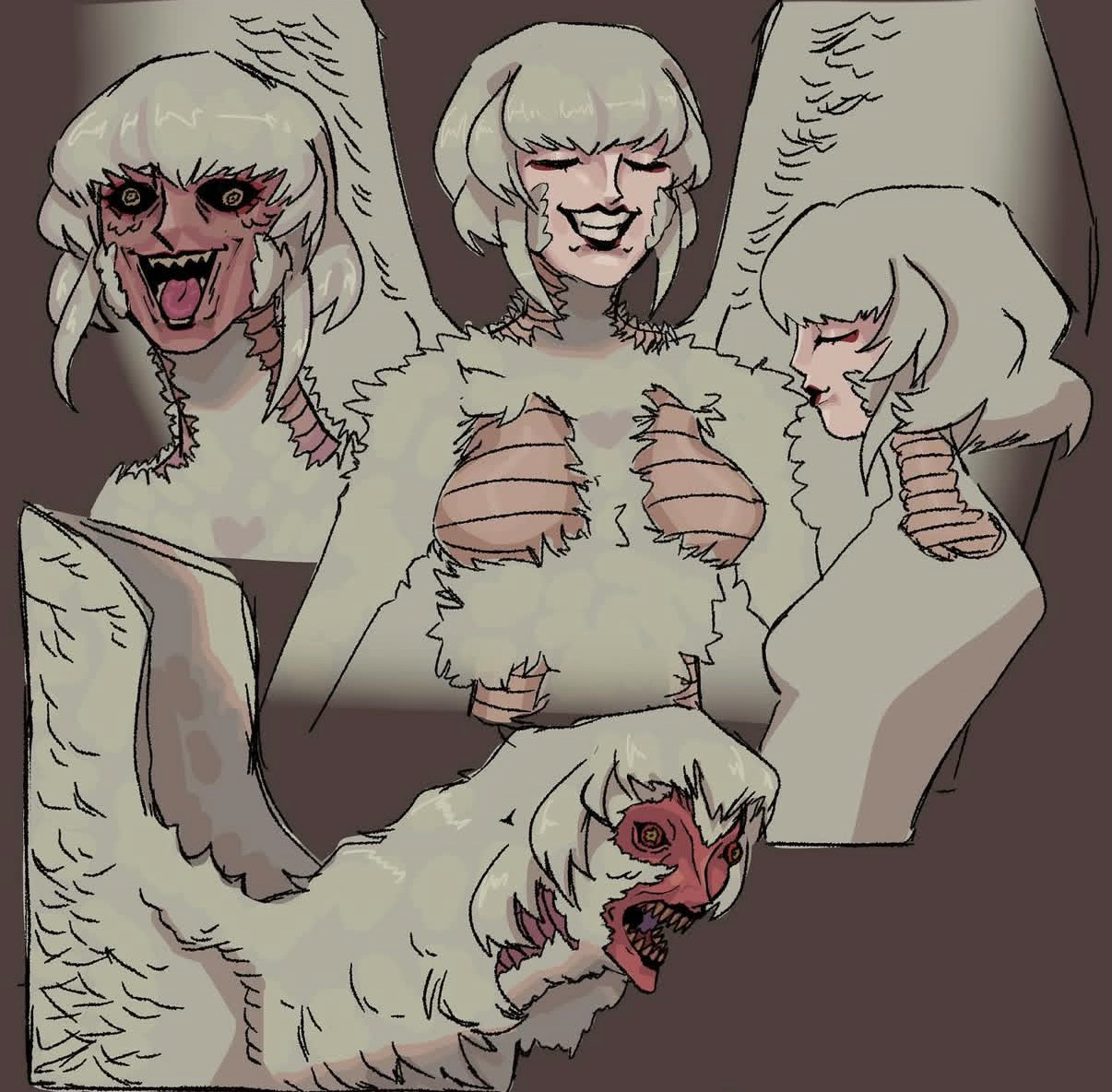
Harpies are an exclusively female species. Their physical variation follows human racial skin tones, suggesting some form of adaptive mimicry or selective evolution tied to human populations. Their faces are deceptively pleasing, featuring smooth skin, dark red lips, and eyes outlined in red pigment. Notably, their eyes are always shut during their passive state. Feathers naturally frame their cheeks, blending seamlessly into the facial structure.
Despite their human-like facial features, everything from the neck down diverges sharply. Their anatomy becomes distinctly avian, resembling a fusion of human and bird physiology. Their bodies are coated in soft white feathers, beneath which lies skin similar in texture to that of a chicken’s feet—rough, scaled, and durable. This feathered covering is absent around the breasts, hands, feet, and hips, where the skin is exposed.
Their wingspan stretches several feet wide, allowing them prolonged flight with little effort. The consistent coloration of their feathers is a pale white shade, regardless of individual variation elsewhere on the body.
Harpies prefer to exist in flocks and are highly vocal. They sing constantly, producing layered melodies that echo over long distances. Some members of the species are known to wield long, sharp lances, while others rely solely on physical strength and aerial combat. They chatter frequently in incomprehensible gibberish and are considered one of the most social demon species on record.
Despite this social behavior, harpies are extremely hostile toward outsiders. Approaching them is strongly discouraged. Once a harpy has identified a target, it will actively torment them before deciding to kill. Common attack behaviors include slamming into victims at high speeds to render them unconscious, lifting them into the air only to drop them from fatal heights, or directly consuming them.
The Harpy possesses a documented three-stage transformation cycle. The second stage occurs when the demon becomes aggravated, typically after sustaining significant injury. During this phase, the harpy opens its eyes for the first time. Its skin shifts into a red hue, and its eyes cross and move erratically, indicating heightened aggression and loss of restraint.
The final transformation is far more severe. The body structure becomes fully avian, resembling an oversized, monstrous chicken. The face elongates and sharpens, losing much of its human resemblance. Teeth become pointed and predatory, the skin deepens into a darker red shade, and the eyes bulge with rage. The pupils turn yellow, and the creature exhibits behavior closer to that of a feral dragon than a humanoid demon.
Though extremely rare, there have been isolated reports of harpies displaying affection or attachment toward certain individuals. In these cases, the harpy did not attack, instead remaining close for a brief period before rejoining its flock. The reason behind this behavior remains unknown.
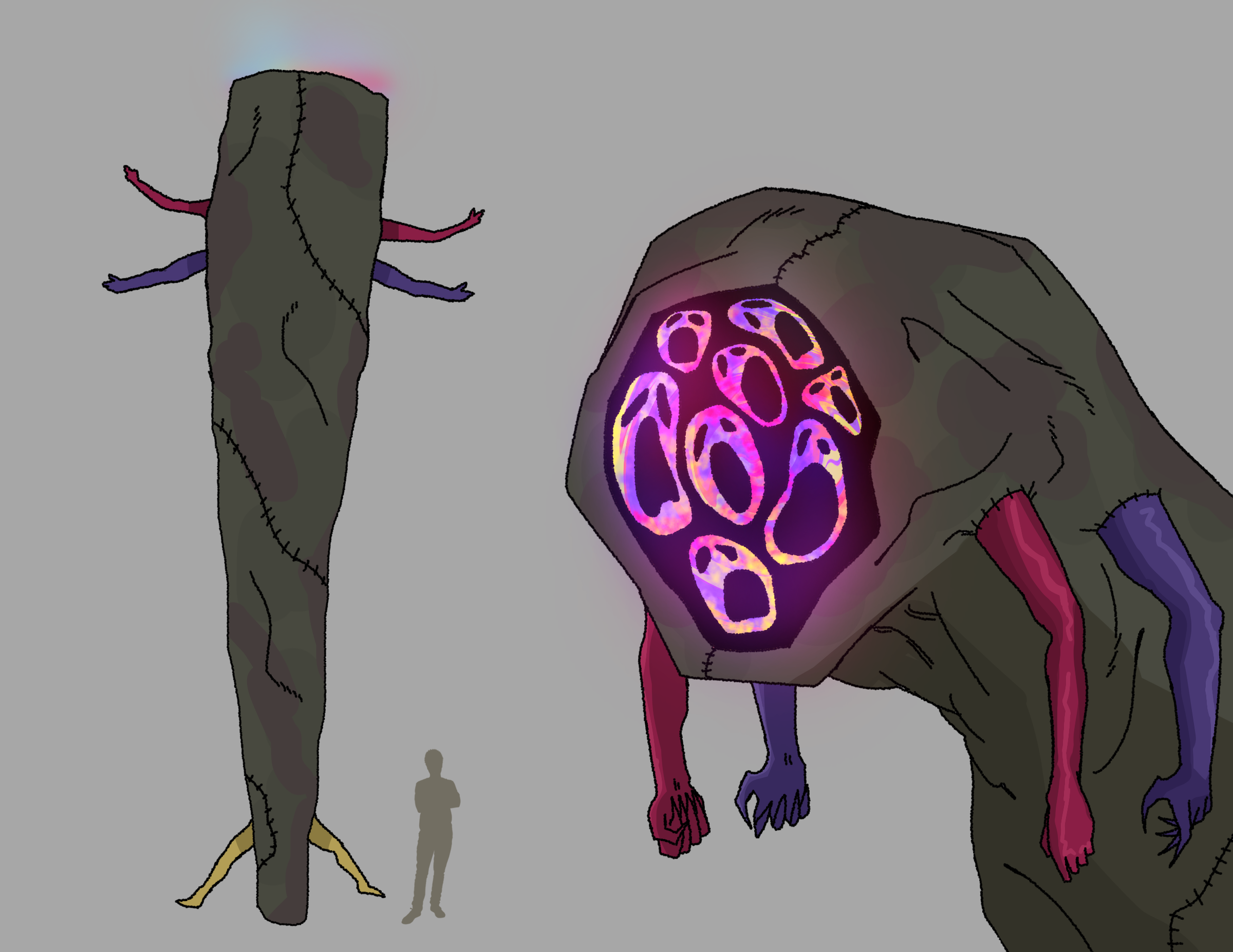
Revenant is a terrifying greater demon that resembles a cross between a chimera and a leviathan. Its body is long and serpentine — small at the tail and progressively wider toward the head. It has two pairs of arms and two legs, with the head area appearing like a hollow socket, revealing glimpses of other Revenants inside.
This greater demon reaches a minimum size of 15 meters. In motion, it undulates like a New Year’s Chinese dragon, performing long, sinuous movements. It can levitate or “fly” at tremendous speeds, crushing victims by landing face-first on them.
When resting, Revenant stands upright, giving the eerie impression of a living, nightmarish tree.
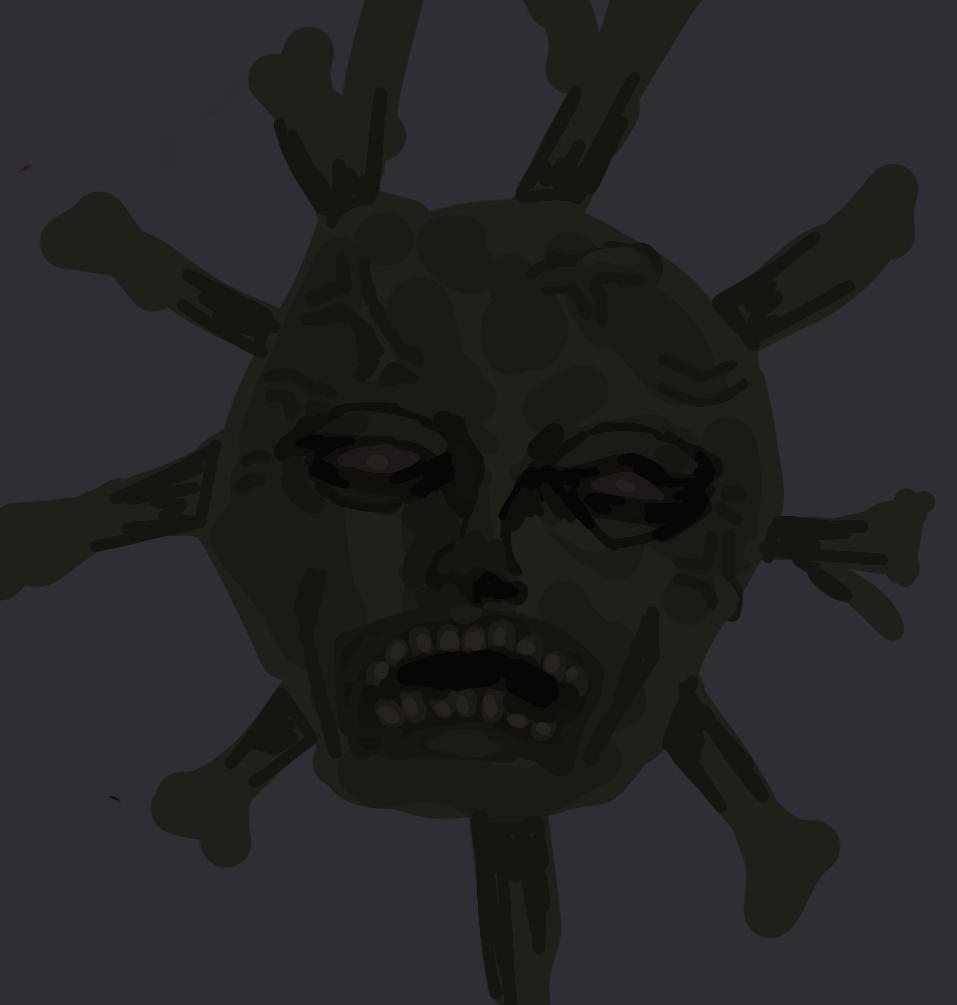
Nosoi is a devil that exists exclusively within Hell and is bound to it, unable to cross into the human world by any known means. Despite this limitation, it is believed to be the primary source behind the sudden and unexplained appearances of Plague demons on Earth.
Nosoi does not walk, hunt, or rule territory in a traditional sense. Instead, it continuously vomits out plagues—living, diseased entities expelled from its form and released into Hell’s ecosystem, some of which eventually breach into the human world through unknown mechanisms.
According to recordings retrieved by a research team that ventured into Hell, Nosoi possesses no true body. Its form resembles that of a virus cell: a central head-like mass with long appendages protruding outward. These appendages suspend it in midair by attaching to massive black roots belonging to plague-infested trees native to the biome it inhabits.
Nosoi is in a constant state of violent sickness. It endlessly vomits thick, sickly fluids while laughing uncontrollably, the sound echoing through the surrounding caverns. The fluids burn on contact and seem alive, crawling and spreading corruption wherever they land.
The stench produced by Nosoi is catastrophic. Exposure has been documented to cause immediate paralysis, while simultaneously burning and frying the interior of the nose, throat, and lungs. Even brief proximity without protection is considered fatal.
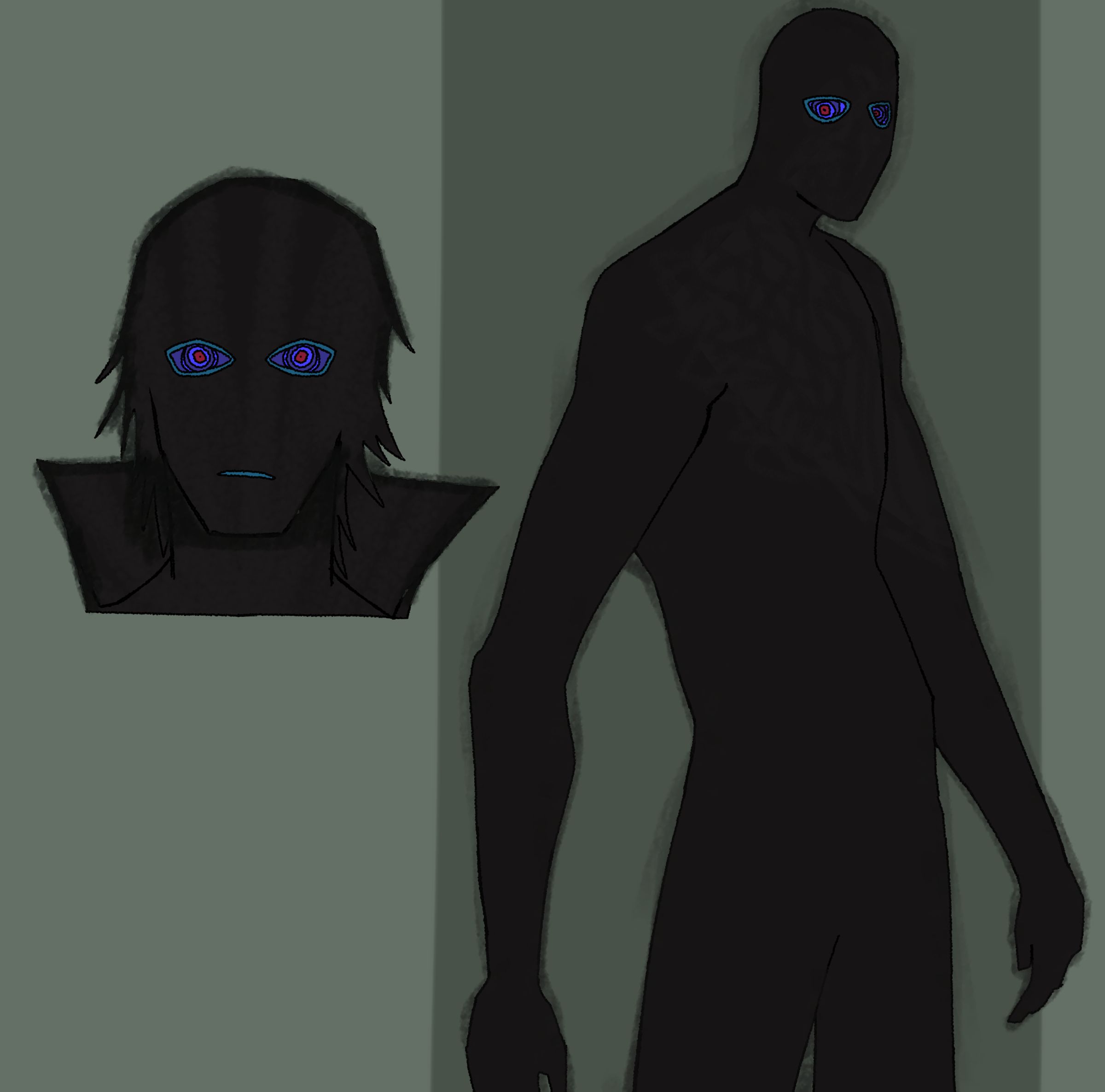
Umbra is classified as a devil, not due to its appearance, but because of the absolute threat it represents. Though it resembles what many would call a “textbook demon,” its nature places it far beyond lesser or even greater classifications.
Umbra does not merely lurk in shadows — it is shadow. It exists within darkness itself, hiding inside the silhouettes cast by living beings. Victims are often unaware they are being followed, as Umbra remains perfectly aligned with their own shadow.
Contrary to common belief, Umbra does not require darkness to exist. When exposed to broad daylight or strong ambient light, its body does not vanish — instead, it becomes highly transparent, appearing as a faint distortion in the air.
Its physical form cannot be damaged by conventional means. Blades, bullets, and blunt force have no effect. The only known force capable of inflicting significant harm is holy light — not illumination alone, but consecrated or sanctified radiance.
Umbra travels the world quietly, manifesting where suffering or opportunity presents itself. Sometimes it kills directly. Other times it delivers omens or abducts individuals entirely, leaving behind nothing but an empty shadow.
Umbra possesses two abilities deemed highly dangerous. The first is duplication — it can split itself into multiple shadow-forms. These copies are vulnerable to ordinary light sources, restricting their use to nighttime or dim environments.
The second ability allows Umbra to merge with and imitate the shadow of another being, granting it access to their physical capabilities. This imitation does not copy memory or will — only function.
Notable Incident Report: Umbra was once confirmed to have copied the shadow of one of the most lethal devil hunters to ever walk Earth and Hell — Todd. The resulting confrontation escalated into a full-scale engagement that completely leveled an ancient cathedral-city where the battle took place.
Despite Todd’s reputation and skill as the foremost devil hunter, he was unable to defeat Umbra through conventional combat. The engagement only ended when Todd was granted holy light by a Supreme Cathedral Nun — a consecrated gift strong enough to disrupt Umbra’s shadow form.
This event remains the only recorded instance of Umbra being decisively repelled rather than merely driven off.
Lesser demons instinctively fear Umbra and will scatter upon sensing its presence. Folklore dating back over five centuries claims Umbra is the reason infants fear their own shadows, having once seen its faintly glowing eyes staring back at them.
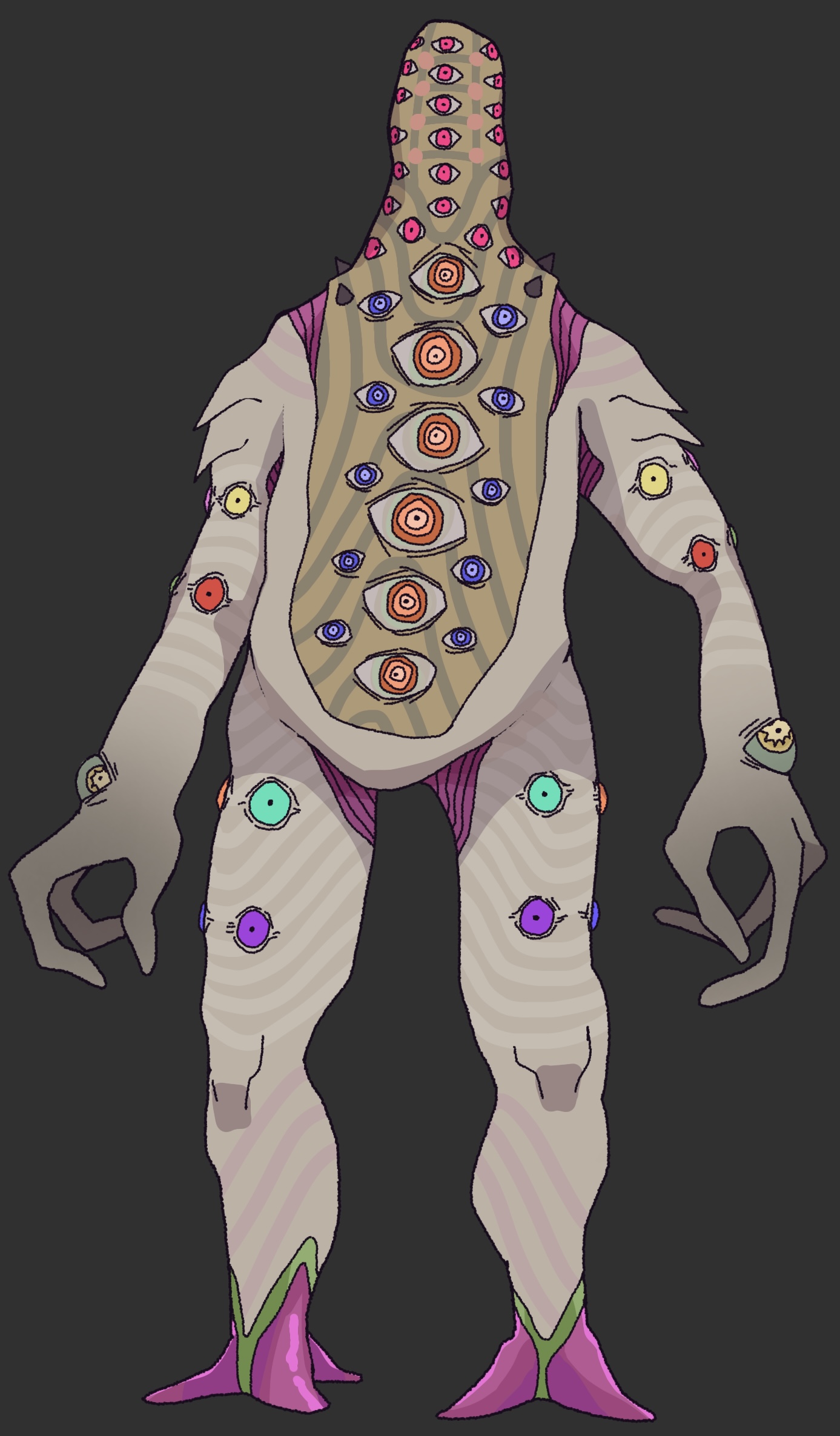
The Dodomeki is classified as a future-sight devil, an entity capable of forcibly cursing its victims with visions of what has yet to occur. These visions are not gifts, but afflictions—used to siphon mental stability, vitality, and eventually life itself from those marked.
Victims of the Dodomeki’s curse exhibit severe physiological symptoms within hours. Persistent nosebleeds, violent vomiting, and prolonged bouts of insomnia are common. As the curse deepens, the victim becomes unable to distinguish waking reality from prophetic hallucinations.
Beyond individual suffering, the Dodomeki thrives on collective madness. It is drawn to large populations on the brink of panic, feeding off paranoia, fear, and social collapse. Records indicate the devil actively manipulates its visions to incite distrust, violence, and mass hysteria, taking apparent pleasure in watching people turn against one another.
In combat, the Dodomeki is known to generate highly convincing mirages, manipulating perception to mislead and disorient its opponents. These false realities often depict moments of safety or victory, only to collapse moments before a lethal strike.
Physically, the Dodomeki is far from fragile. Its limbs are capable of stretching unnaturally to ensnare targets at range, coupled with immense physical strength. Beyond this, its body functions as a living damage sponge, absorbing punishment through rapid cellular replication.
This regeneration is driven by uncontrolled, cancer-like cell manipulation, allowing destroyed tissue to be replaced almost instantly. While this makes conventional attacks largely ineffective, the process is not without limitation. Sustained, overwhelming damage can overwork the regenerative system, causing the Dodomeki’s body to enter a temporary state of burnout.
When this burnout occurs, visible damage can finally be inflicted, and the devil becomes momentarily vulnerable. However, once its body is allowed to cool down and the regenerative strain subsides, the Dodomeki’s healing capabilities resume in full, often leaving no trace of prior injury.
Historical records and forbidden testimonies suggest the Dodomeki once cursed three entire states simultaneously, plunging their populations into mass hysteria, prophetic madness, and widespread societal collapse before its presence vanished.
Despite its cruelty, the Dodomeki possesses a disturbingly refined sense of humor. It frequently mocks its opponents mid-conflict, offering false reassurance or bleak jokes. Many accounts describe the devil laughing as it shows its victims a peaceful, fabricated future moments before their death.
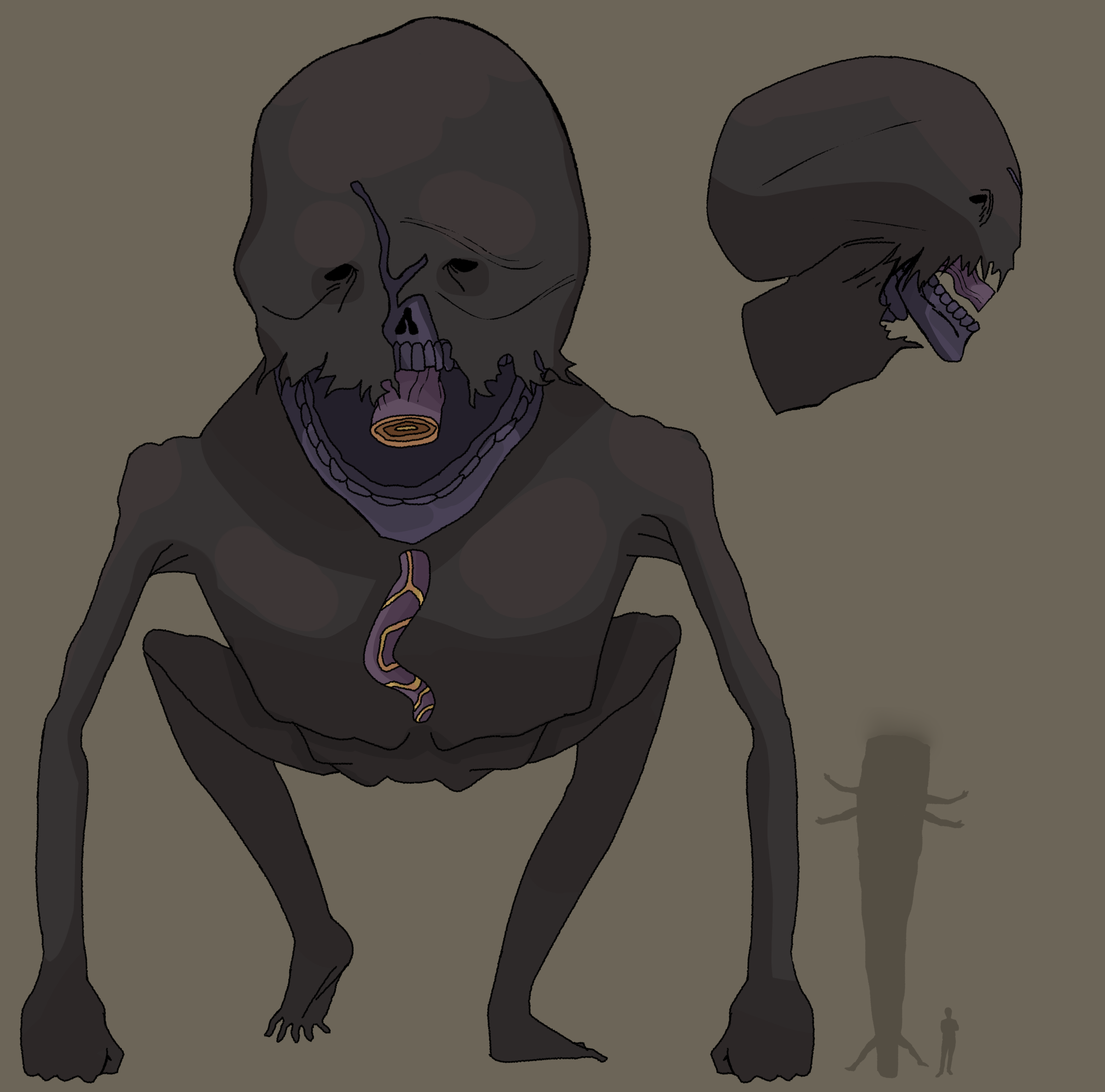
The Blight Walker originates from the deepest known strata of Hell, an entity unlike any other devil encountered. What makes it uniquely catastrophic is that it is not an individual being, but an entire species. Unlike singular devils bound by identity or will, Blight Walkers are autonomous organisms—mass-produced engines of extinction.
Ancient records and apocalyptic legends describe the Blight Walkers as the heralds of the Death March. It is said that once all Armageddon Towers achieve full synchronization, these creatures will begin to manifest en masse, crawling forth to walk the earth and strip it of life.
A fully mature Blight Walker measures approximately forty meters tall while moving on all fours. Though their mass suggests they could stand upright, their anatomy prevents it. Their skeletal structure and inverted leg joints are specifically adapted for quadrupedal locomotion, allowing them to traverse terrain with horrifying stability and endurance.
Physical contact with a Blight Walker is universally fatal. Any surface of its skin induces immediate biological decay. Flesh begins to wither upon touch, followed by rapid cellular death, as if the life itself is being rejected by reality. Armor, organic matter, and even reinforced materials degrade rapidly after prolonged exposure.
Embedded within the creature’s mouth is a stem-like, root-based parasitic organ. This appendage functions as a living sensory probe, constantly scanning the ground and surrounding area for signs of life. Once a living organism is detected, the parasite latches onto the target and siphons the victim’s soul directly from their body.
The extraction is instantaneous. The victim’s corpse collapses and withers in seconds, and at the exact location of death, a spined blight tree erupts from the ground. These growths rapidly mature, impaling the remains and continuing to spread their roots deep into the surrounding soil, contaminating the area long after the Blight Walker has moved on.
Entire regions consumed by Blight Walkers are often left uninhabitable, transformed into forests of thorned, corpse-fed growths. These blight zones continue to drain residual life from the environment, suggesting the creatures do not merely kill, but permanently poison the land itself.
Despite their immense durability, Blight Walkers are not without structural weaknesses. Observations indicate that their joints—particularly where limb segments connect—are thinner and less armored than the rest of their body. Concentrated attacks on these areas may impede mobility, though disabling a Blight Walker entirely remains exceedingly rare.
Classified projections conclude that the appearance of even a single Blight Walker constitutes an extinction-level event if left unchecked.
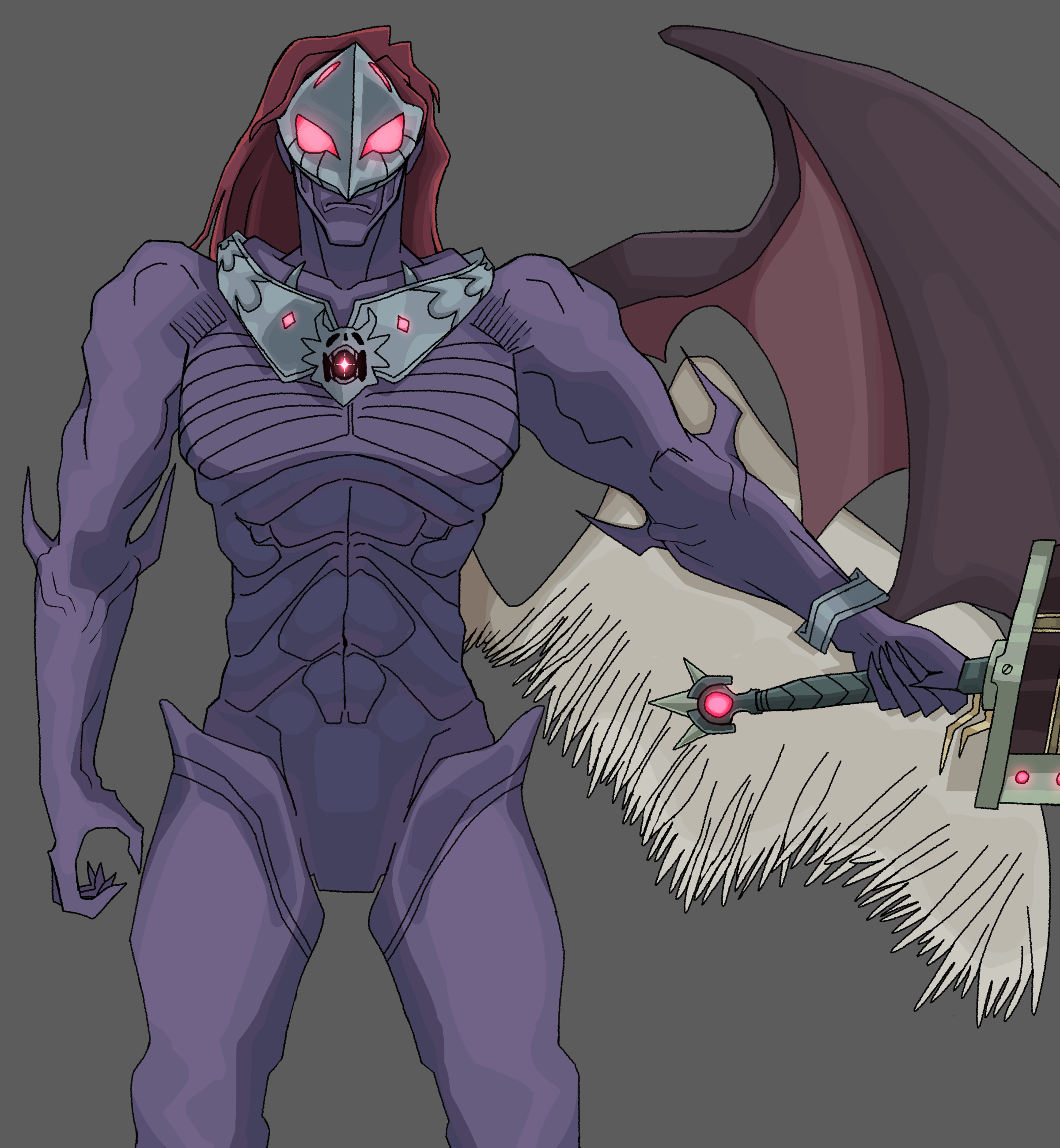
Lucifer was once an angel of the highest order, serving as the right hand of the Good Lord himself. His fall was not the result of ignorance or deception, but of ambition. A desire for power and dominion beyond his station ultimately led to his banishment into Hell, where divinity and punishment reshaped him into something far more dangerous.
Over centuries of suffering, Lucifer became a master deceiver. His words are carefully chosen, his presence persuasive and calculated. Trusting him is considered a fatal error, as his nature mirrors that of manipulators such as Faust—entities that twist truth until loyalty becomes a weapon.
Hell has irreversibly altered Lucifer’s form. Endless exposure to infernal environments, divine rejection, and sustained combat have mutated his body into an Angel–Devil hybrid. This unique state allows him to wield both angelic and demonic energies simultaneously, an ability previously thought impossible.
However, this duality comes at a severe cost. When Lucifer channels excessive angelic power, his body reacts violently. Observed side effects include uncontrollable spasms, neural overload, and temporary blindness lasting several seconds. These moments leave him vulnerable, though he often compensates through overwhelming demonic retaliation.
Despite his corruption, Lucifer retains a partial weakness to religious and holy-based attacks. Standard rites and blessings are largely ineffective; only amplified or exceptionally potent religious forces are capable of causing meaningful harm.
Physically, Lucifer’s appearance reflects his fall. His skin has taken on a deep purple hue, warped by mutation and infernal exposure. His hair burns a vivid red, and his body bears numerous signs of forced evolution rather than natural decay.
He adorns himself with metal plating fused into his form—armor embedded into his head and a collar-like structure wrapping around his neck and upper chest. A single metal wrist brace is worn on one arm. These constructs appear to function not only as armor, but as regulators, suppressing and stabilizing his demonic energy to prevent total loss of control.
Lucifer wields a massive sword once believed to be holy in origin. Though its core still carries traces of divine craftsmanship, it now surges with demonic energy, warped to reflect its master. The weapon radiates both sanctified and corrupted forces, making it exceptionally lethal to nearly all known entities.
Above all else, Lucifer is driven by one goal: to surpass the one who cast him down. His pursuit of power is relentless, obsessive, and unending. He seeks not redemption, but proof—that he can stand equal to, or above, the divine authority that condemned him.
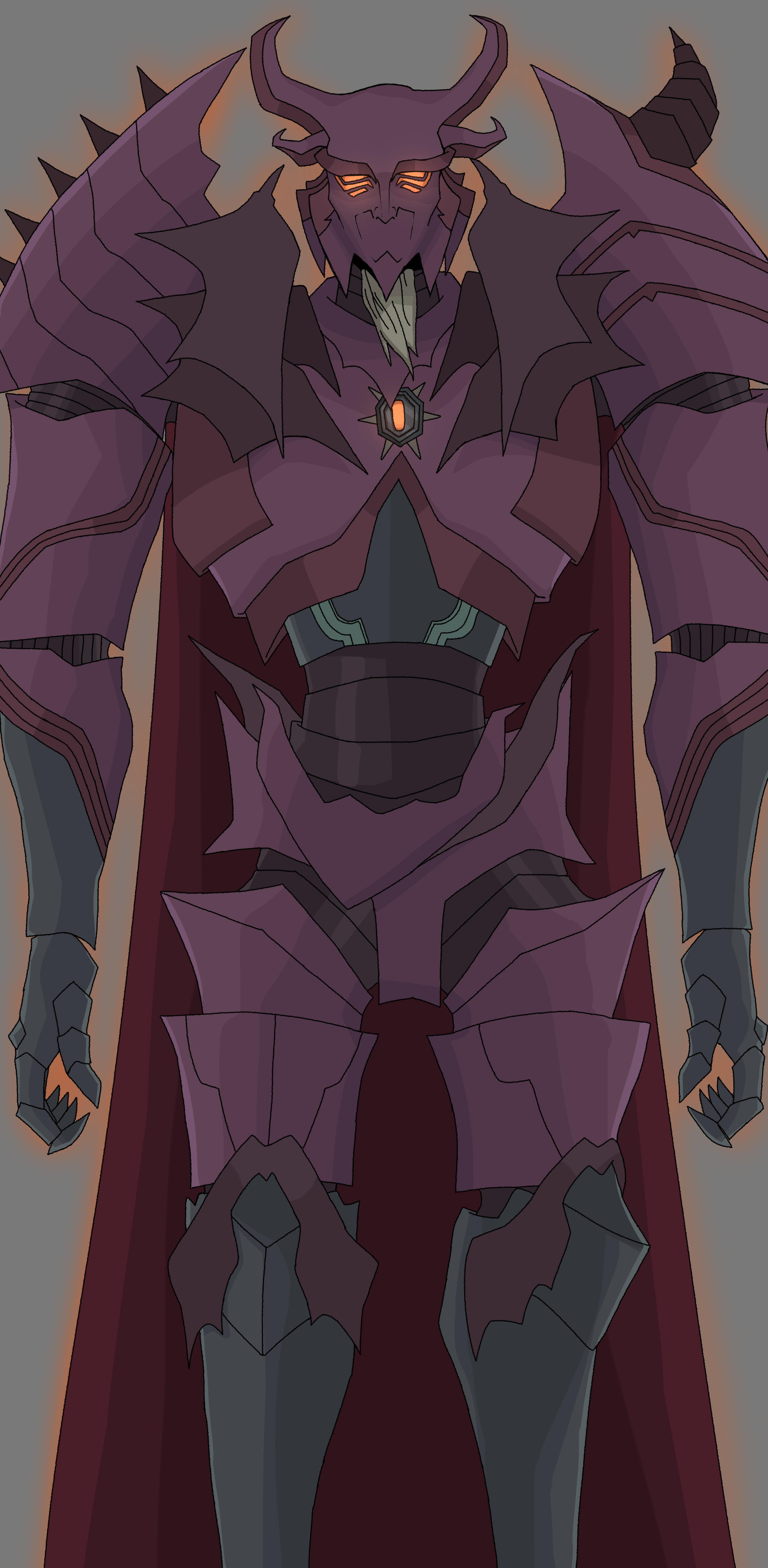
Pluto is classified as a divine devil, lacking any angelic origin or celestial sanction. His divinity is not inherited, nor granted, but earned through power alone, placing him outside both heavenly and infernal hierarchies.
Long before modern records, it is believed that Pluto once ruled over Hell itself. Billions of years ago, he reigned as a tyrant king, enforcing order through overwhelming strength and absolute authority. Entire layers of Hell were shaped under his dominion, though most records of this era have either been erased or deliberately destroyed.
At some point in this ancient age, Pluto is said to have grown bored of ruling. Rather than being overthrown, he willingly abandoned the throne, coming to believe that domination was dull and predictable. He concluded that allowing nature, chaos, and conflict to take their own course was far more interesting than controlling it.
Pluto holds no interest in who currently claims Hell’s throne, nor does he concern himself with those who seek it. To him, succession is meaningless. Empires rise and collapse regardless of intervention, and he finds no purpose in deciding their outcomes.
Standing approximately eight feet tall, Pluto is encased in mystical demonic armor and a long, flowing cape. Despite his presence, he bears no wings. His movements are disciplined and efficient, reflecting mastery rather than brute force.
He is exceptionally skilled in hand-to-hand combat and swordsmanship, favoring precise, decisive actions over prolonged battles. Beneath his armor lies a physical form composed not of flesh, but of dense, volatile energy. This energy radiates constantly, visible through fractures in his armor, while his beard remains one of the few visible remnants of corporeal form.
Pluto possesses the ability to create isolated pocket dimensions and teleport freely across space and time. Legends also attribute him with the creation of artificial planets, formed far beyond known solar systems to avoid interfering with existing life.
He follows a strict personal code rooted in chivalry and non-interference. Pluto refuses to disrupt natural selection, believing that death, extinction, and survival are necessary processes. He does not fight without cause and avoids conflict unless it serves a purpose beyond domination.
Despite his current detachment, some accounts suggest that the fire which once fueled his tyranny has not been extinguished—only dormant. It remains unknown whether this flame will ever reignite, or if Pluto will once again return to his former ways.
In recent eras, Pluto has been reported missing. The prevailing belief is that he has either isolated himself within self-created dimensions or is traveling the universe in solitude. His disappearance is not considered a sign of peace, but of uncertainty.
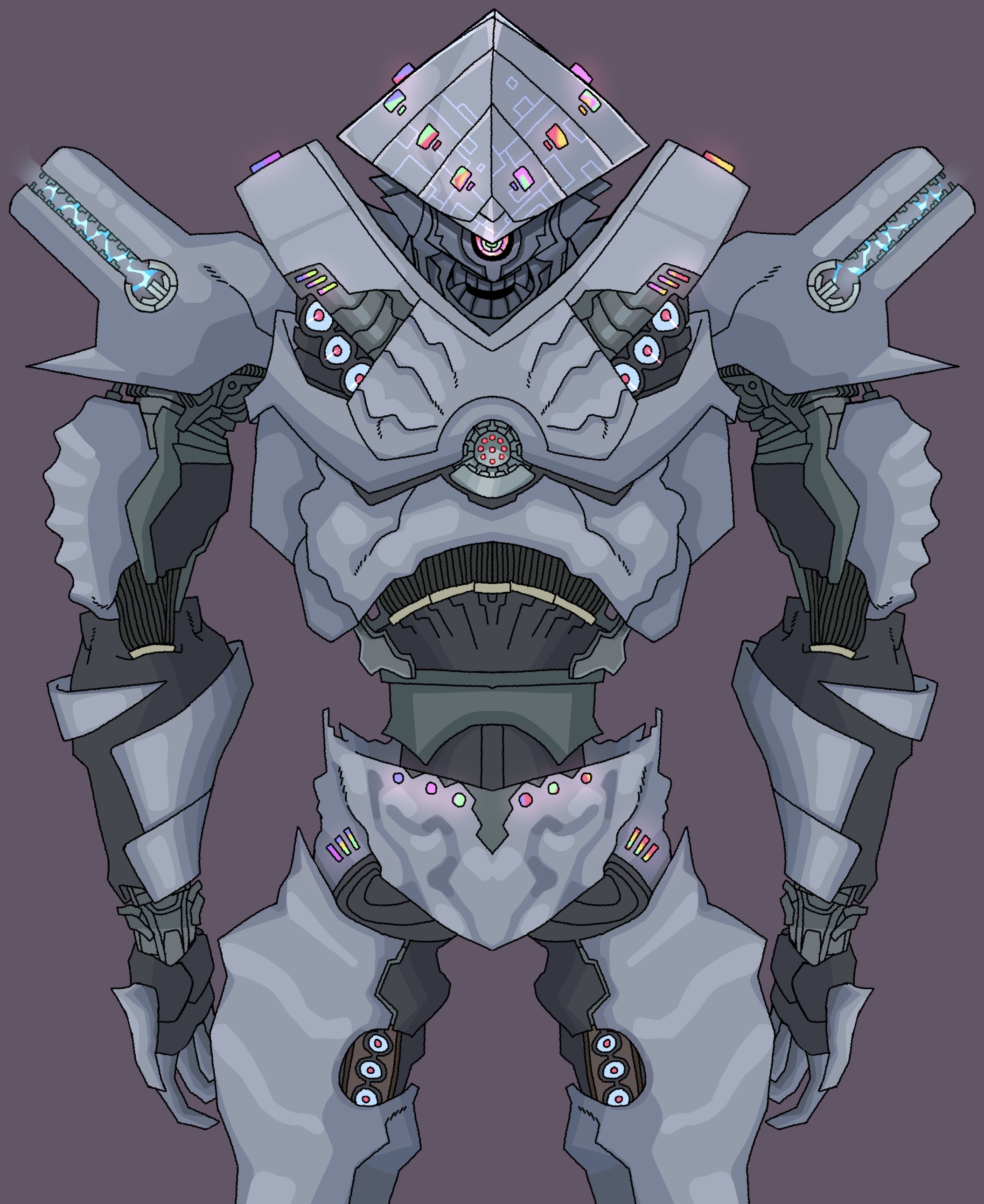
Plasma is a devil that resides within a sector of hell dominated entirely by industrial cores and perpetual thunder storms. This region is defined by constant electrical discharge, mechanical pressure, and endless production cycles, creating an environment where organic life rarely survives without adaptation.
Visually, Plasma appears both mechanical and organic. Its body is encased in a chrome exoskeleton resembling armored plating, while beneath the surface lies living tissue fused directly with machinery. This fusion is seamless, making it difficult to determine where flesh ends and metal begins.
Its arms are fully modular, capable of morphing into various weaponized forms. These transformations occur rapidly and appear to be controlled by internal systems rather than instinct alone, suggesting deliberate and controlled functionality.
Plasma is capable of speech through both conventional vocalization and Morse code. When communicating in Morse code, it emits sharp electrical pulses accompanied by brief flashes of light, often used in high-stress situations or when verbal communication is deemed inefficient.
The devil’s vital area is located within the core of its chest. This core functions as both a power source and stabilizing organ. If destabilized, it begins to emit nuclear-level energy, rapidly increasing in volatility. Complete failure of the core would result in catastrophic detonation within its immediate vicinity.
Plasma’s behavior indicates restraint and situational awareness. It does not exhibit constant aggression, instead responding based on environmental conditions and perceived threat levels.
Along with that, during combat Plasma right away likes to go overkill against its opponents.
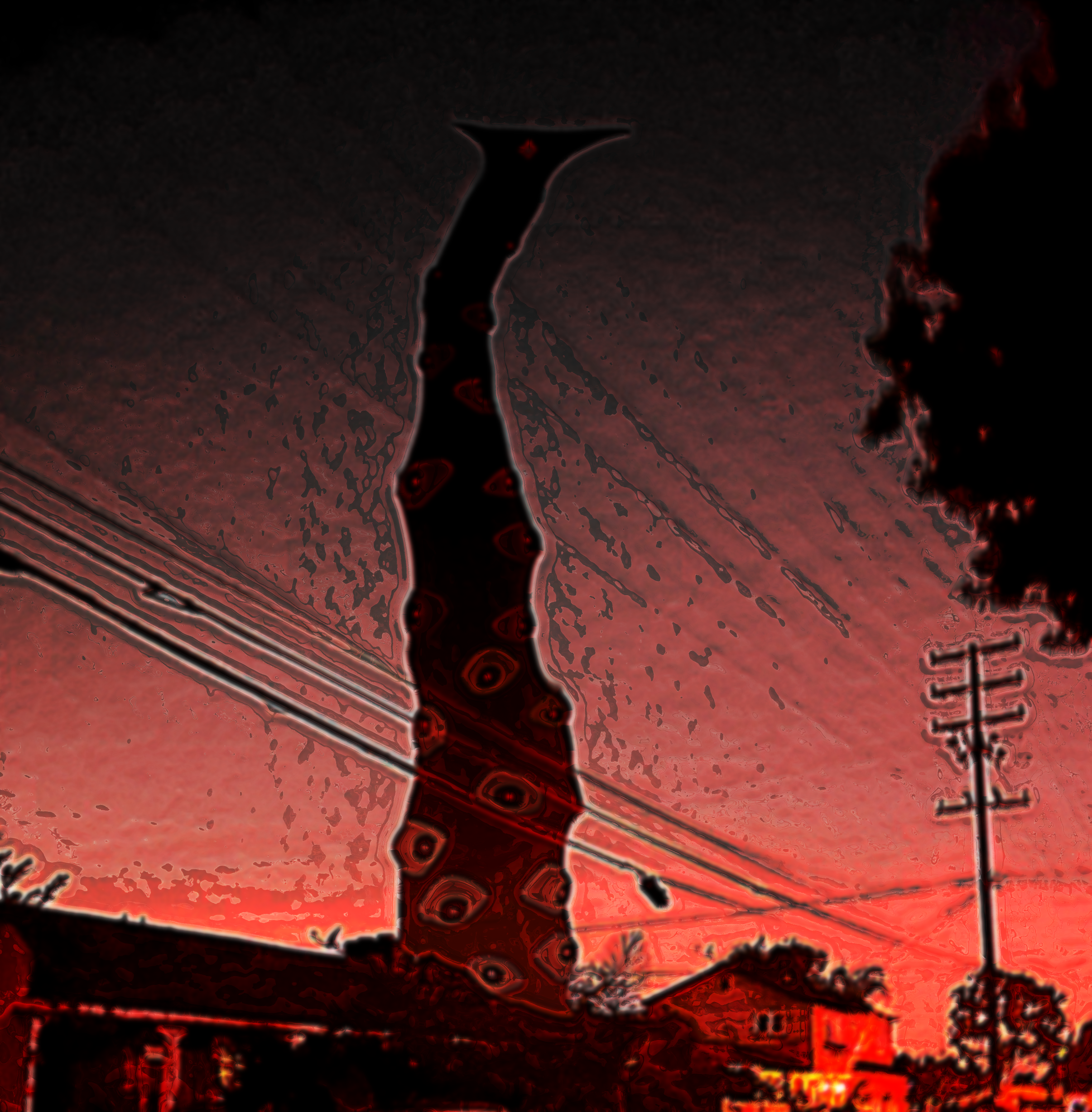
Armageddon Tower is a strange, grotesque, and eerie tower that suddenly appeared out of nowhere. Its existence is horrifying, and reports indicate more towers have appeared across the world, some breaking through government properties like the Washington Monument or special areas like Easter Island.
The tower's flesh pulses constantly, with bulging eyes that seem to stare at anyone nearby. From miles away, the repugnant odor of sulfur is noticeable. Closer encounters can cause headaches, heart attacks, vision loss, schizophrenia, and manic insanity.
Extreme caution is advised. Only devil hunters and qualified priests from supreme cathedrals should approach.
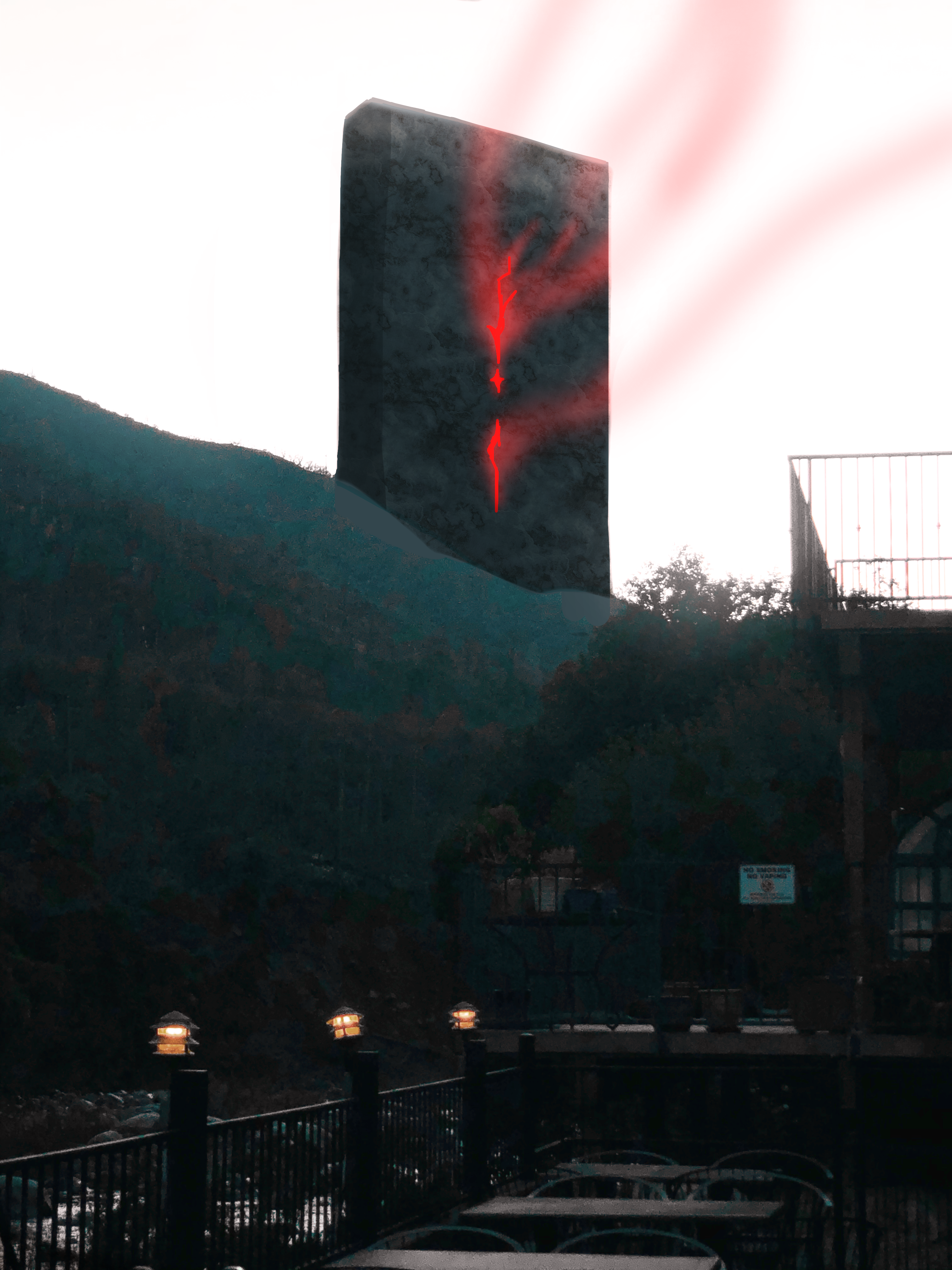
Hell Gate is exactly what it sounds like: a gate to Hell itself. These gates appear roughly once every 500 years, similar to sudden monoliths that materialize from nowhere.
The stench surrounding a Hell Gate is truly unbearable, as it serves as a direct gateway for demons and devils to pour into our world. Their presence is extremely dangerous, and approaching one without qualification is virtually certain death.
According to our records, only five such gates have appeared across the United States. Only highly trained devil hunters or priests from supreme cathedrals scattered around the world are authorized and capable of handling these anomalies.
It is strongly recommended that civilians and unqualified personnel stay far away from these gates. The consequences of interacting with or entering them are fatal.

The Crystallized Skull of St. Faraday is believed to have once belonged to a woman named Faraday, a legendary warrior from the distant past. According to fragmented historical records and mythological accounts, she wielded immense power far beyond that of any ordinary human.
Faraday was said to perform miracles on the battlefield, reviving fallen brothers and sisters and turning the tide of hopeless conflicts. The skull itself is believed to be the key to ascending into a state of near godhood, though the true extent of this ascension remains unknown.
Those who approach the skull report auditory and visual hallucinations. Some claim to hear a beautiful, calming voice calling to them, while others report seeing the figure of a woman from afar, watching silently. These manifestations appear benevolent, almost holy in nature.
Despite its noble and godlike presence, the skull is extremely dangerous. If a demon were to come into contact with it, their life force would be slowly drained until nothing remains. Humans exposed to the skull experience intense fatigue, weakness, and a gradual loss of consciousness.
The only known way to stop this effect is through immediate absorption. To absorb the skull, an individual must focus their mental intent entirely on the act. If successful, the skull will disappear into the person’s hand, though the consequences of such an act are not fully understood.
If this relic were to fall into the wrong hands, the resulting outcome is considered catastrophic and unpredictable.
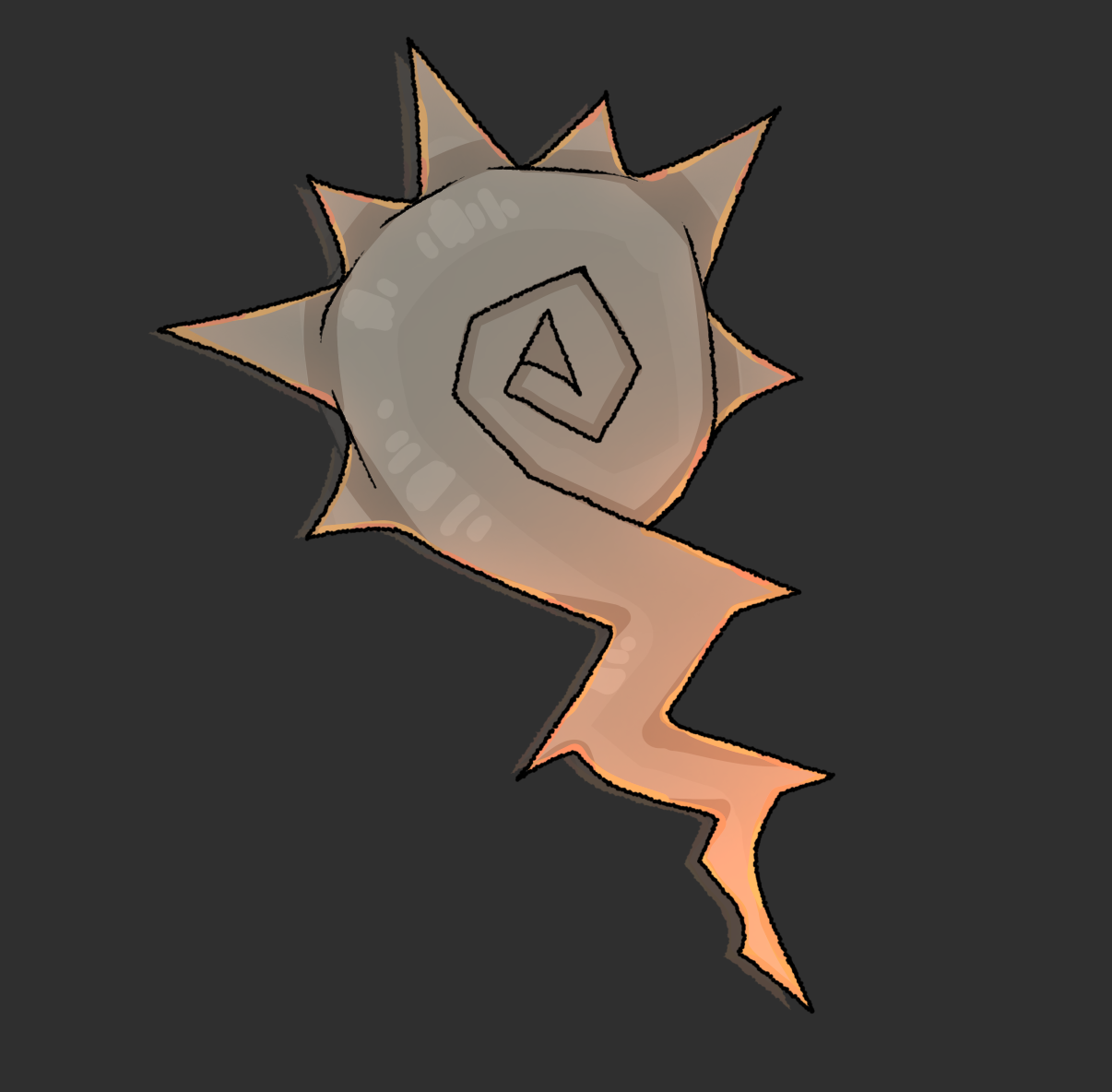
This seal belonged to a dragon that lived over 1000 years. It had an elder brother who ruled a continent with infinite death and tyranny. When the younger brother was born, it rose against its sibling to forge a new age of freedom. The elder brother’s fate remains unknown, but the younger dragon ultimately perished after defeating him, leaving behind its legacy.
The Ivorsaxx Seal grants its power only to those of pure soul and righteous intent. Those deemed worthy are transformed into a draconic form, their bodies infused with immense strength, ancient wisdom, and the lingering power of Ivorsaxx. The Seal awakens latent abilities and allows its bearer to wield draconic might in moments of great peril.
Anyone who approaches the Seal with ill intent will be scorched wherever it is held and violently thrown back. The Seal acts as a judgment of the dragon’s will, protecting its power from unworthy hands.
Over centuries, the Seal has only appeared to heroes of great valor. To wield it is not merely to inherit power, but to accept the responsibility of carrying the essence of a millennia-old dragon, shaping the world through both awe-inspiring and terrifying force.
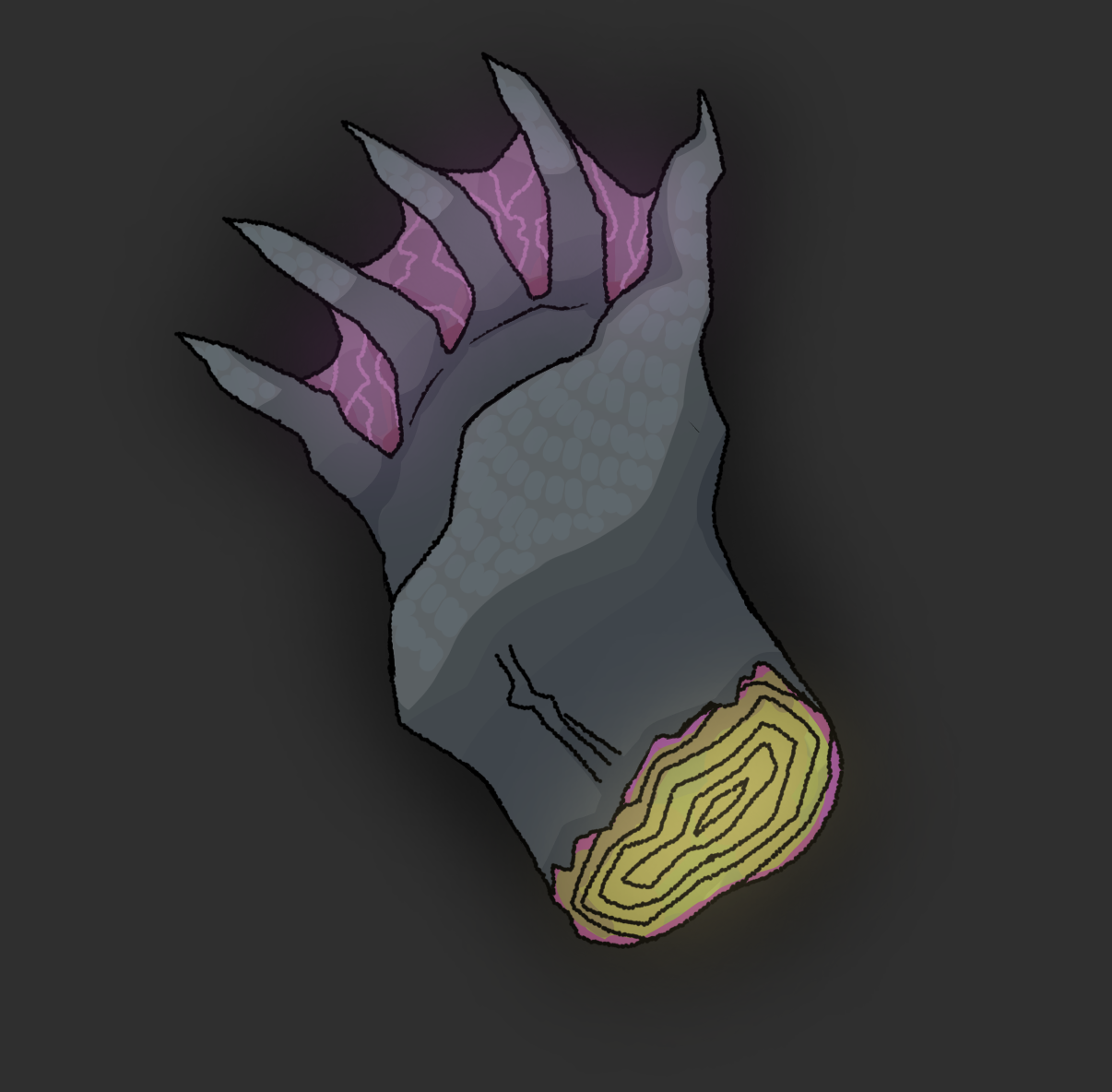
The Unsanth Seal is the dark counterpart to the Ivorsaxx Seal. While it grants immense power, it spreads dread and corruption rather than freedom and honor.
Unlike the Ivorsaxx Seal, Unsanth does not require a worthy soul or good intentions. Anyone who comes into contact with it is transformed into a draconic form, but the power it bestows twists and corrupts their mind, body, and spirit over time. It amplifies aggression, malice, and chaos within its bearer.
Legends state that this artifact is stored somewhere deep within the ocean floor, hidden away to prevent its corruptive influence from spreading. Its location remains a mystery, though many fear it will one day rise again to claim the unguarded or unwary.
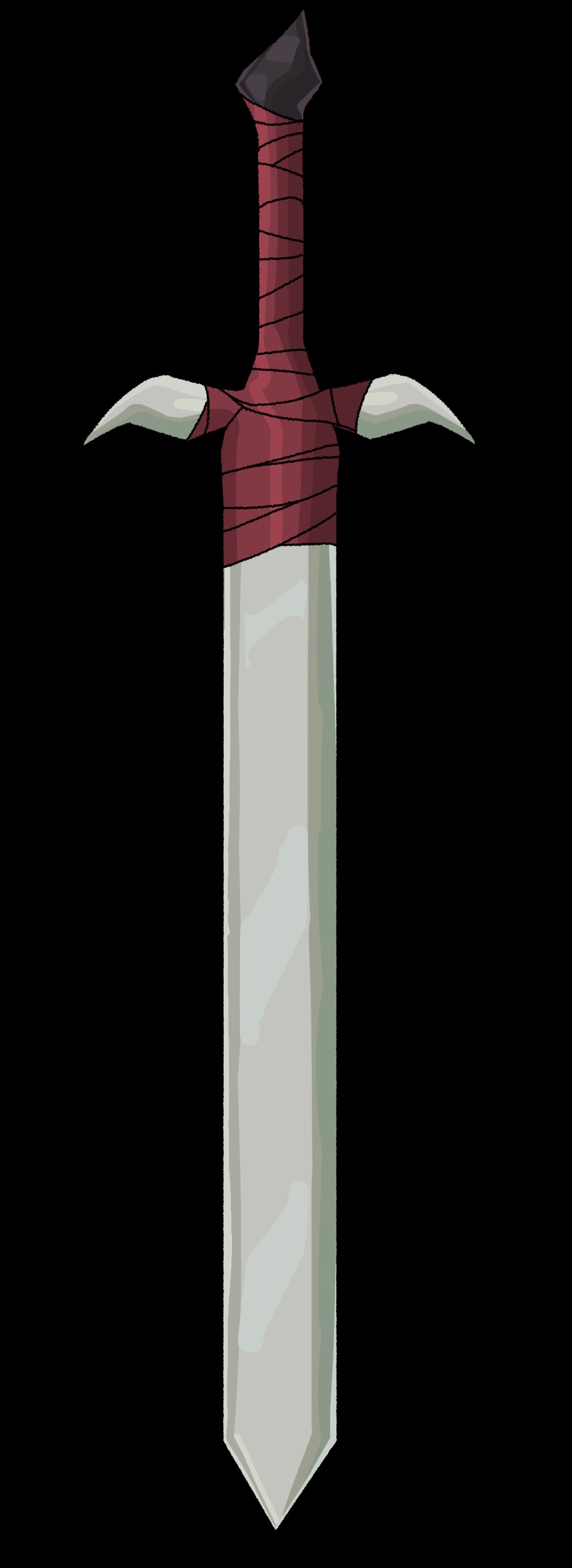
This sword seems to be born out of Todd’s will. It started appearing after his first not-so-nice and gruesome transformation at some plaza fighting the demon that killed his friends. It responds to Todd and can be summoned whenever.
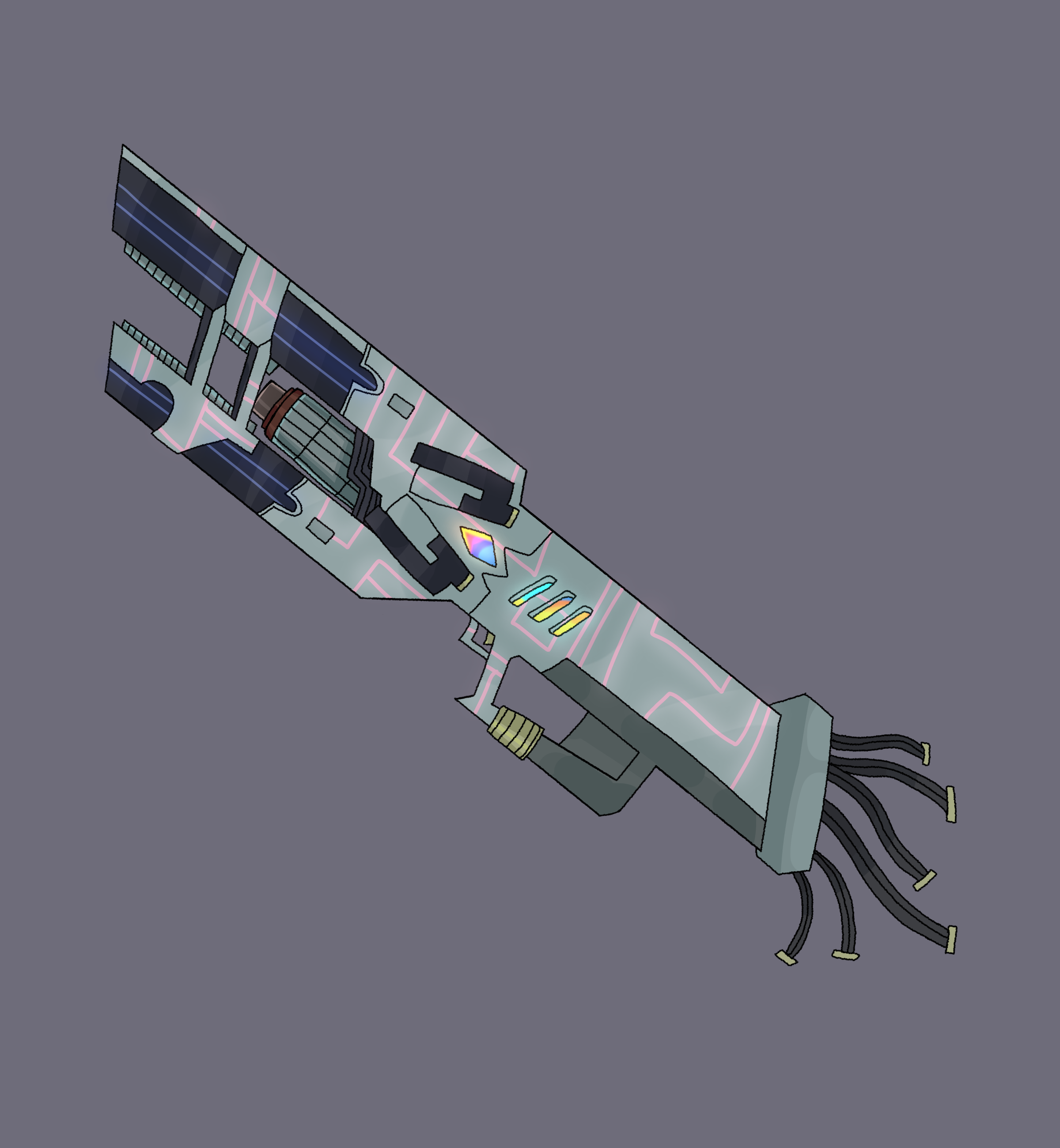
Plasma restructures itself into a rail gun capable of extreme piercing power, enough to tear clean through multiple demons in a single shot if they are aligned.
The internal motor is perpetually active, running at a staggering two hundred billion revolutions per minute, leaving the weapon in a constant state of overclock. This makes Pierce Mode relentlessly aggressive, even when idle.
Holding the trigger allows the user to overcharge a shot, forcing the motor far beyond its already unstable limits. The longer the charge is held, the more violent the discharge becomes.
However, this devil arm is not without consequence. Excessive charging causes intense heat buildup, risking burnout if abused for too long.
CONFIDENTIAL — UNAUTHORIZED DISTRIBUTION OF THIS INFORMATION IS STRICTLY PROHIBITED
This project was started for the very reason that the government wanted stronger, better, more agile, and fully obedient soldiers.
Development began shortly after samples of demon blood were successfully gathered and contained. This is where the project should have ended. It did not.
The Omega Strain exists in an incubated viral state. Once implanted into a host, it “hatches” and begins fusing itself directly into the host’s spinal system, threading through the nervous structure and embedding itself permanently.
While initially effective, granting extreme strength, agility, and forced obedience, prolonged exposure causes the host to begin straining. Outcomes vary — some hosts die immediately once mutation begins, while others achieve a state of full symbiosis.
The downside is severe. Hosts either become mindless or violently aggressive toward anyone nearby. Physical changes include abnormal growth in height and mass, greyed skin, and glowing red veins visible throughout the body.
This project was not started in Salt Lake City. However, the product was later transported there. The original source of the parasite remains unknown.
![[REDACTED]](Untitled98_20251221111957.png)
Video transcript
Pho to t ken at ▇▇▇▇▇▇
Th govern ent is p oduc ng ▇▇ ▇▇▇▇. I can’t st y m ch
Long r
Ag in
Th D l ta Co any
s b h ind t is